
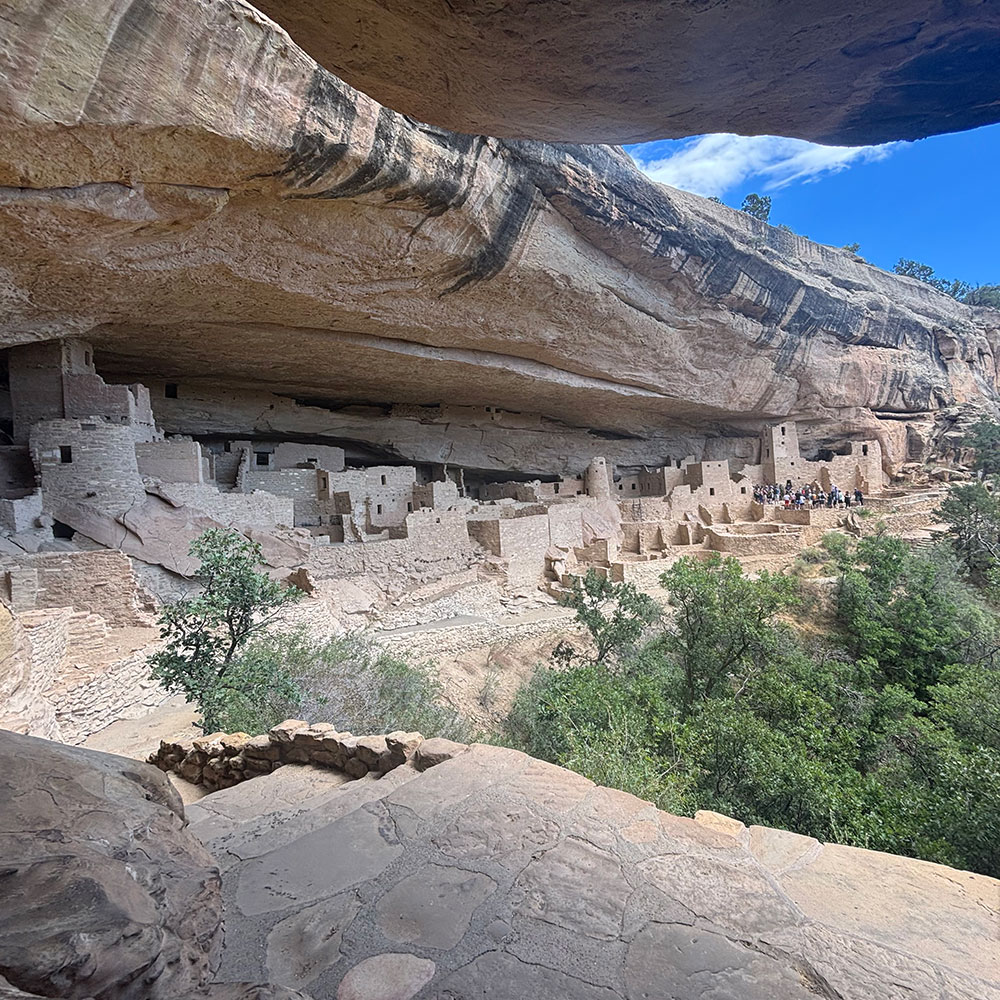
Last summer, we planned a trip to Durango, Colorado—a chance to spend time together and explore a part of the country we hadn’t visited before. While we were there, we set aside a day to visit Mesa Verde National Park.
The drive alone makes it clear how remote the park is. The landscape stretches out in every direction—broad, quiet, and expansive. It’s hard to fully take in at first. It’s the kind of place that immediately shifts your sense of scale, where distances feel longer and the land itself becomes the primary presence.
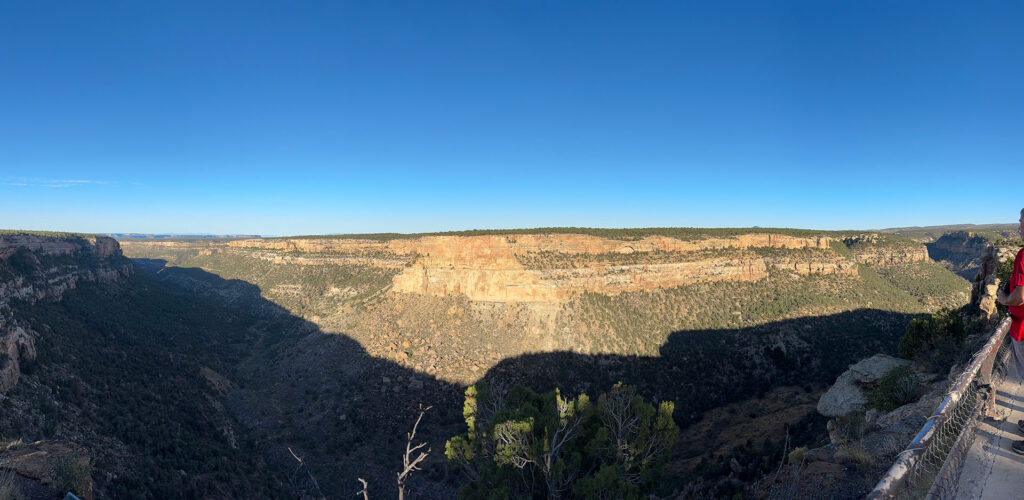
Across the canyon
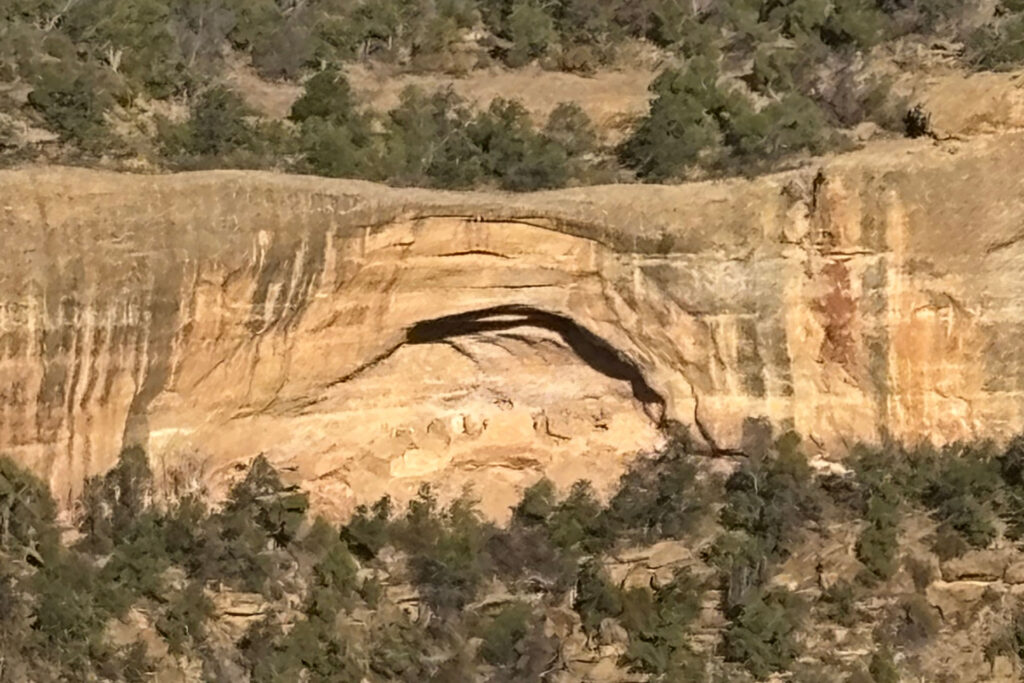
From the overlooks, the cliff dwellings appear almost unexpectedly—tucked into the canyon walls across a wide expanse of open space. At first, they don’t quite register as real places. The distance flattens them, turning them into something closer to an image than a lived environment.
We found ourselves reaching for binoculars, trying to understand what we were seeing. Entire communities, built into the rock, suspended between the mesa above and the canyon below. It’s hard to grasp the scale—not just the size of the landscape, but the precision of where and how these structures were placed.
The descent
Seeing the dwellings from across the canyon is one thing. Moving into them is something else entirely.
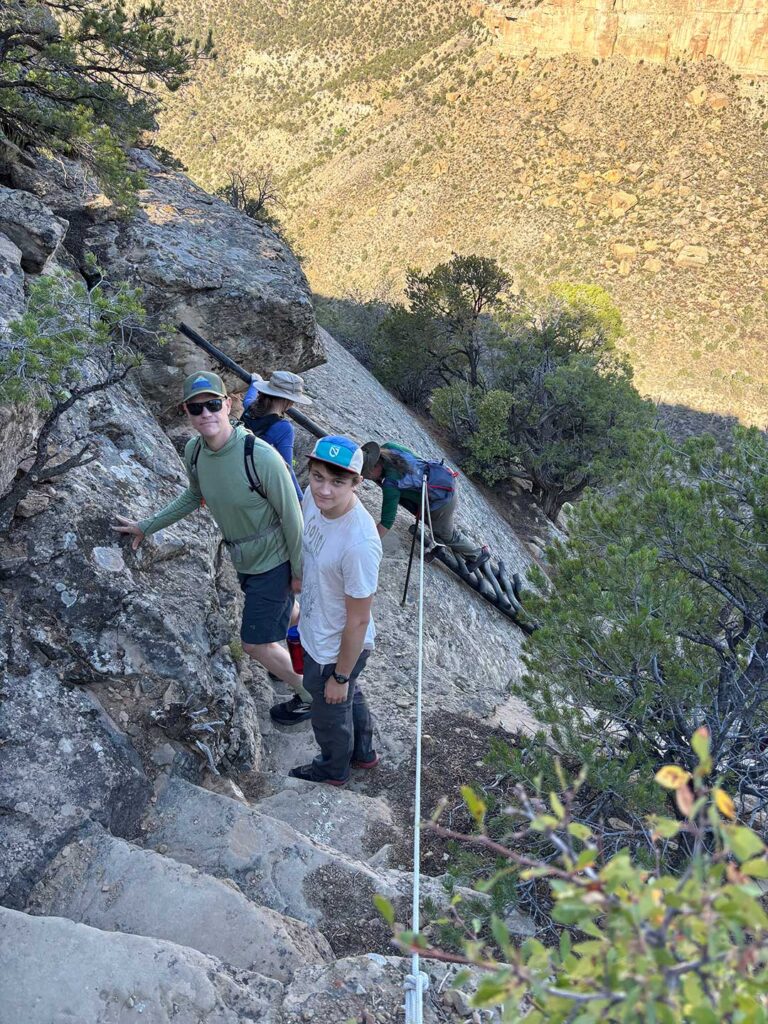
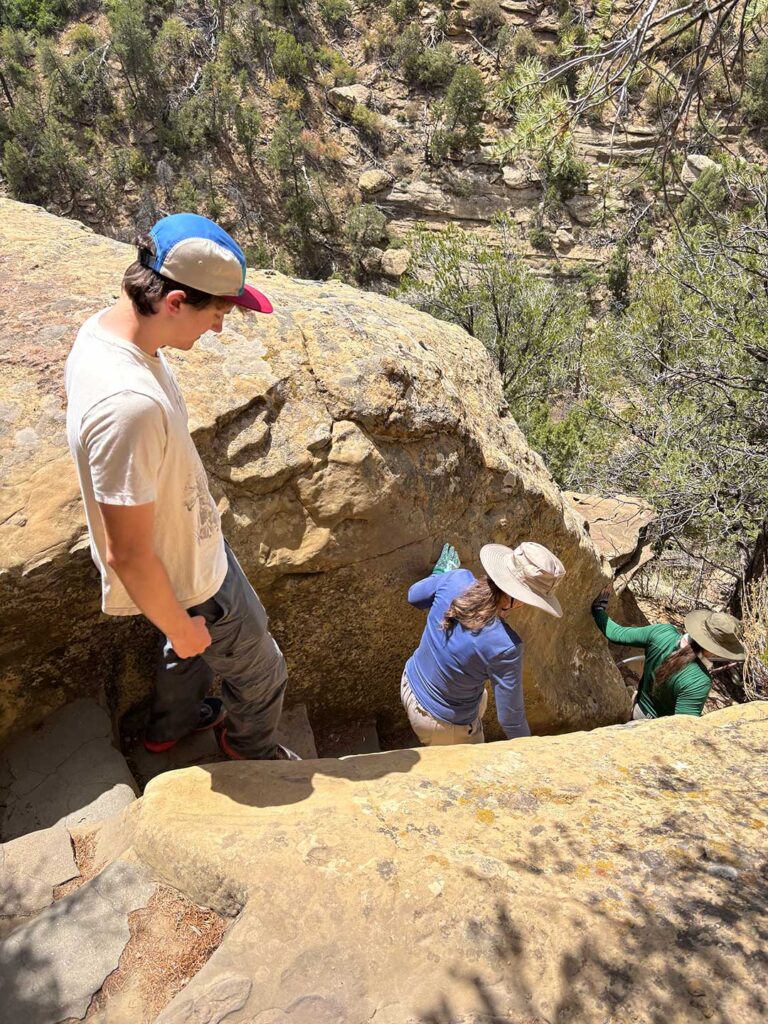
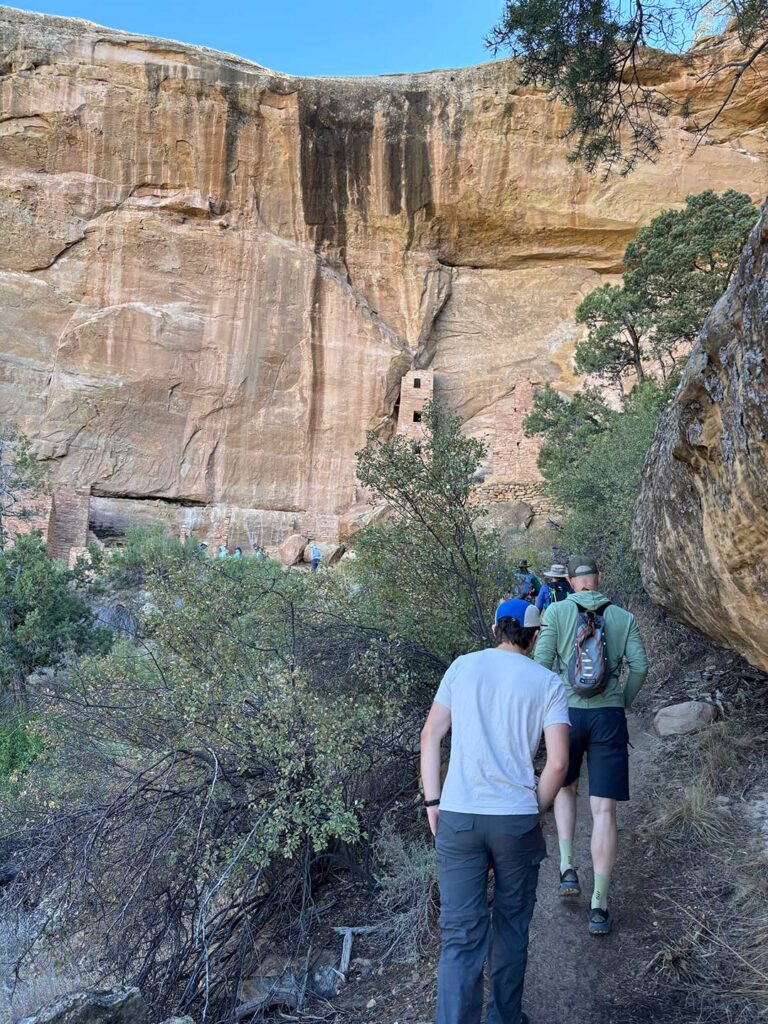
We joined a guided tour that led us down into one of the cliff dwellings—descending along narrow paths and steep steps, then climbing down ladders to reach the structures themselves. It felt a bit like stepping into an entirely different world. What had read as distant and almost abstract from above quickly became immediate and physical.
Stepping inside
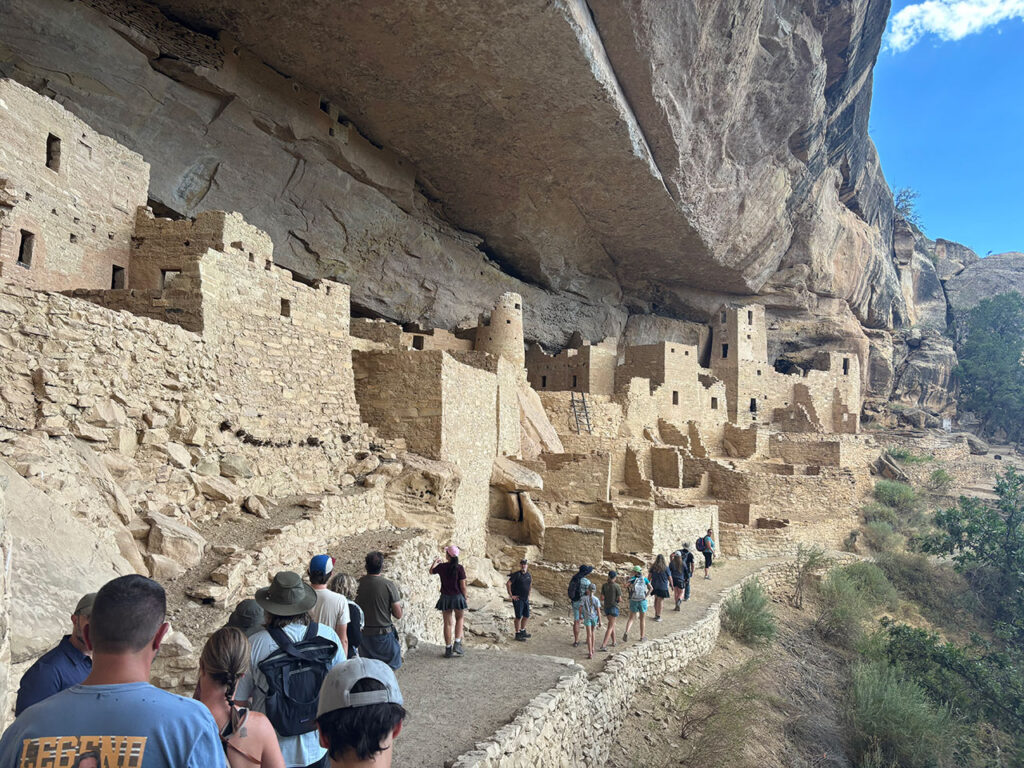
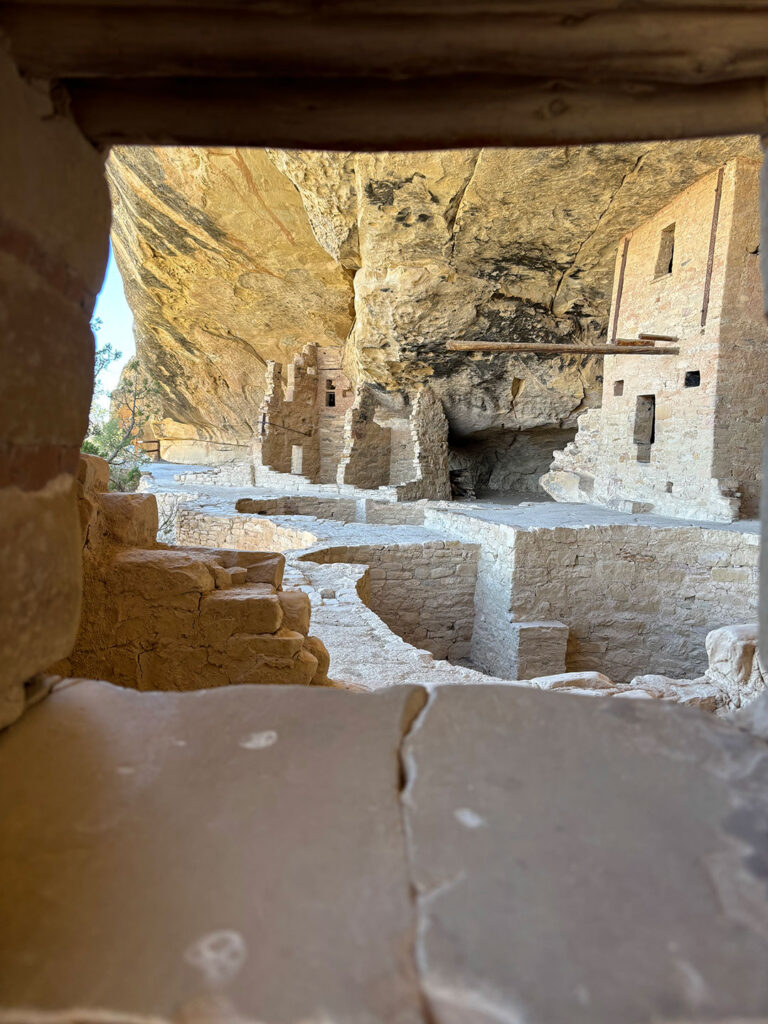
Inside, the scale shifts. The walls are close, the spaces defined and purposeful. You’re no longer looking at architecture—you’re moving through it. It becomes easier to imagine daily life here: how people gathered, cooked, rested, and moved between spaces carved into the rock.
What first appeared as a series of objects across the canyon now reads as a network of rooms—connected, inhabited, and tied to the rock face that surrounds them.

The kiva
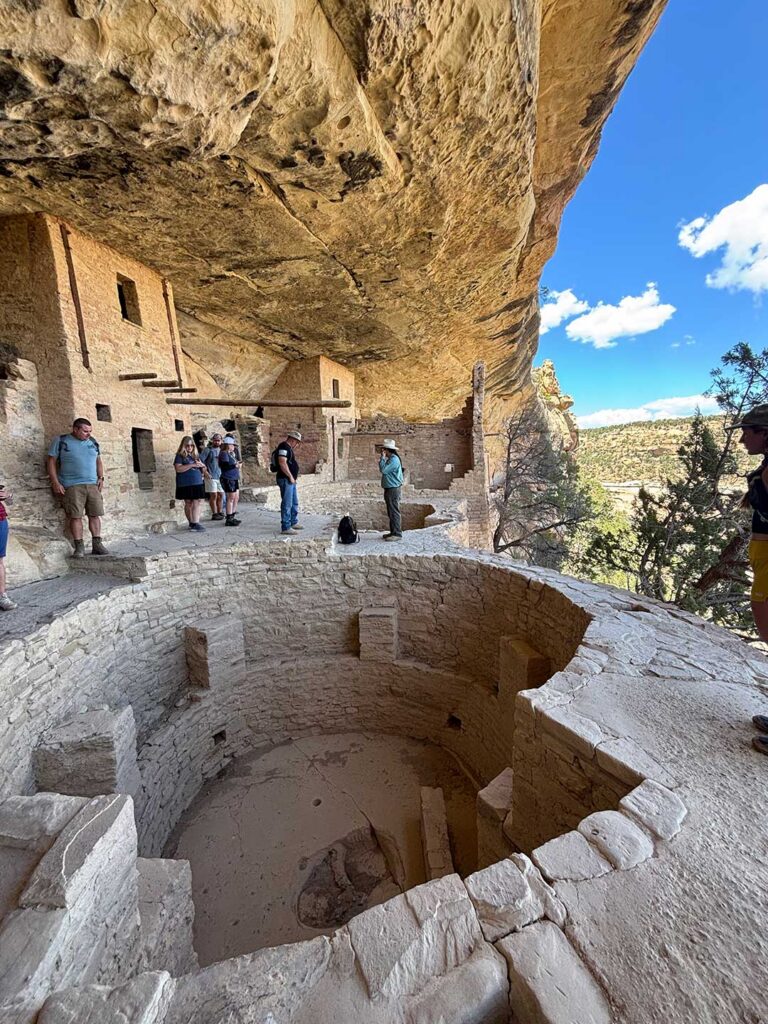
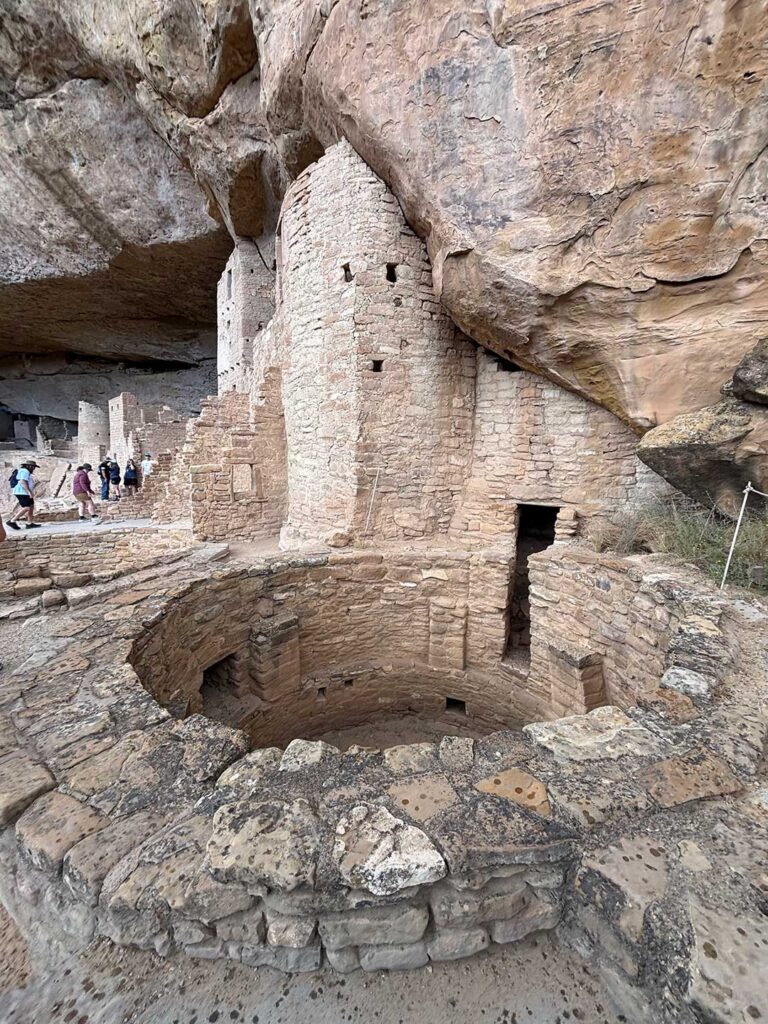
At the center of many of these dwellings is a circular, partially subterranean space known as a kiva—a place for gathering, ceremony, and shared life.
From above, they read almost as voids—simple openings in the ground. Up close, their purpose becomes more legible. These weren’t isolated rooms tucked into the cliff, but part of a larger, connected way of living.
Home was never just the dwelling
As we moved through the site, our guide—whose family traces back to the people who once lived here—offered a perspective that reframed everything we were seeing.
The cliff dwellings were only one part of daily life. People grew crops on the mesa above. The canyon provided protection. The paths between connected it all. Home extended beyond the walls of a structure, reaching across the entire landscape.
It’s a simple idea, but it changes the way you understand the place. What appears, at first, to be a collection of remarkable buildings is actually part of something much larger—an interconnected system of living that spans the mesa top, the cliff face, and everything in between.
Standing there, it became clear that the dwellings themselves were just one piece of home. The land, the movement through it, and the relationship between these elements were just as essential.

Rethinking what ‘home’ means
That idea stayed with me long after we left.
In most of our work, we define “home” by the building itself—the walls, the roof, the rooms inside. The site is something we respond to, work within, or shape to support the structure. Even in the best cases, the house and the land can still feel like separate things.
But at Mesa Verde, that distinction doesn’t really exist.
The dwellings are inseparable from the rock that holds them. The life that happened there extended beyond the structures—across the mesa, along the paths, through the landscape as a whole. Home wasn’t an object placed on the land. It existed within it.
It’s not a direct comparison to how we live today, nor is it meant to be. But it prompts a different way of thinking—about how we define home, and how closely it ties to the place it occupies.
A change in perspective
Places like Mesa Verde National Park have a way of shifting how you see things—not all at once, but gradually, as the experience settles in.
Our guide mentioned that, of all sixty-three national parks, this one was set aside not just for its natural wonder, but for the people who lived here. It’s a simple idea, but it stayed with me.
At Mesa Verde, it’s the idea of home that lingers—not something contained within walls, but something shaped by the land, the movement through it, and the relationships it supports. It’s a different way of thinking—one that’s less about what we build, and more about how we belong to a place.
If this resonates, feel free to reach out.