
This Craftsman kitchen renovation is part of a 100-year-old home in the Laurelhurst neighborhood—full of charm, history, and the details that make Craftsman houses so enduring. Like many kitchens of its era, the space had been shaped more by circulation than by use. Despite its size, it was awkward to work in. The goal was to respect the character of the house while rethinking the layout for modern life, focusing on one precise design move rather than a major expansion.
A layout that left little room to cook
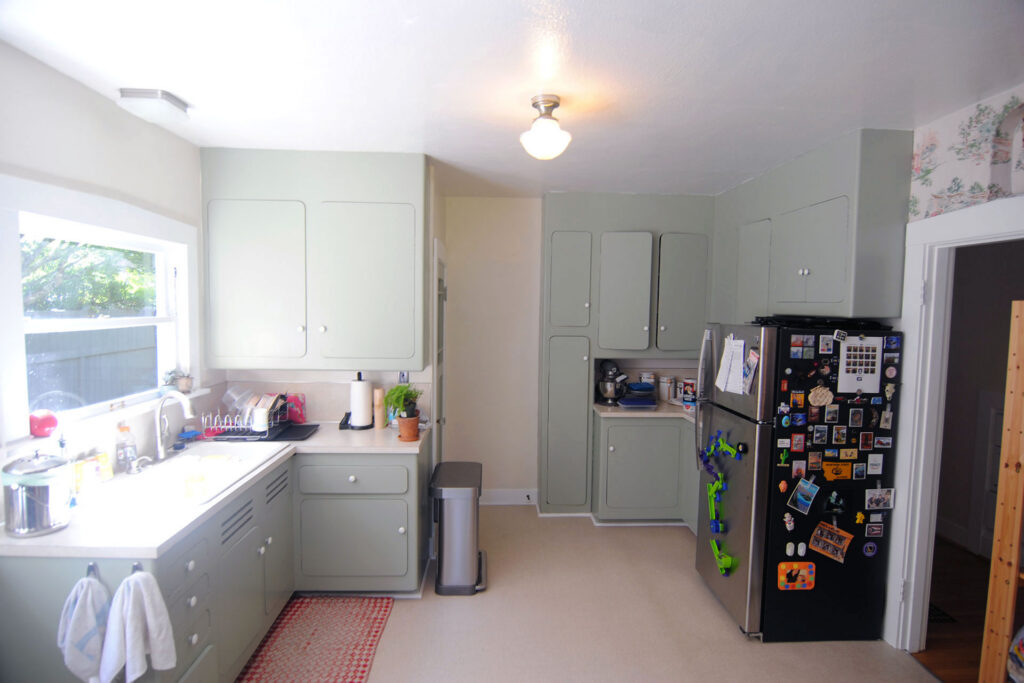
The original kitchen reflected a layout that was common when the house was built—but difficult to live with today. Doors, windows, and circulation paths dominated every wall, leaving little room for usable counter space, storage, or thoughtful workflow. The range sat on its own without adjacent prep space. Countertops followed an irregular wall condition that made them awkward to use, and the room itself wasn’t even square.
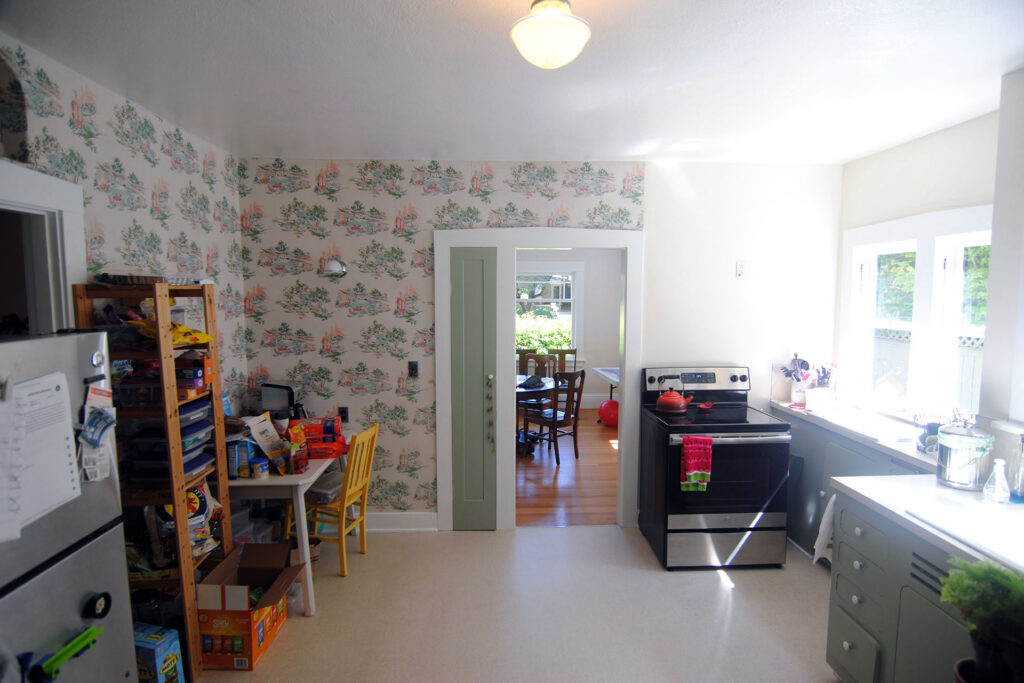
To make things more challenging, the kitchen also functioned as a pass-through to the back door and basement stairs. A short run of steps cut into one corner of the room, further breaking up an already compromised layout. Despite the kitchen’s overall size, there was little that actually worked well—an issue many owners of older homes will find familiar.
Squaring up the room
The biggest shift in this kitchen came from addressing the room’s awkward geometry. One wall jogged in just enough to make the counters inefficient and limit any functional layout. By pushing the exterior wall out just 18 inches, we were able to square up the room—adding only about 20 square feet to the house, but completely changing what this Craftsman kitchen renovation could be.
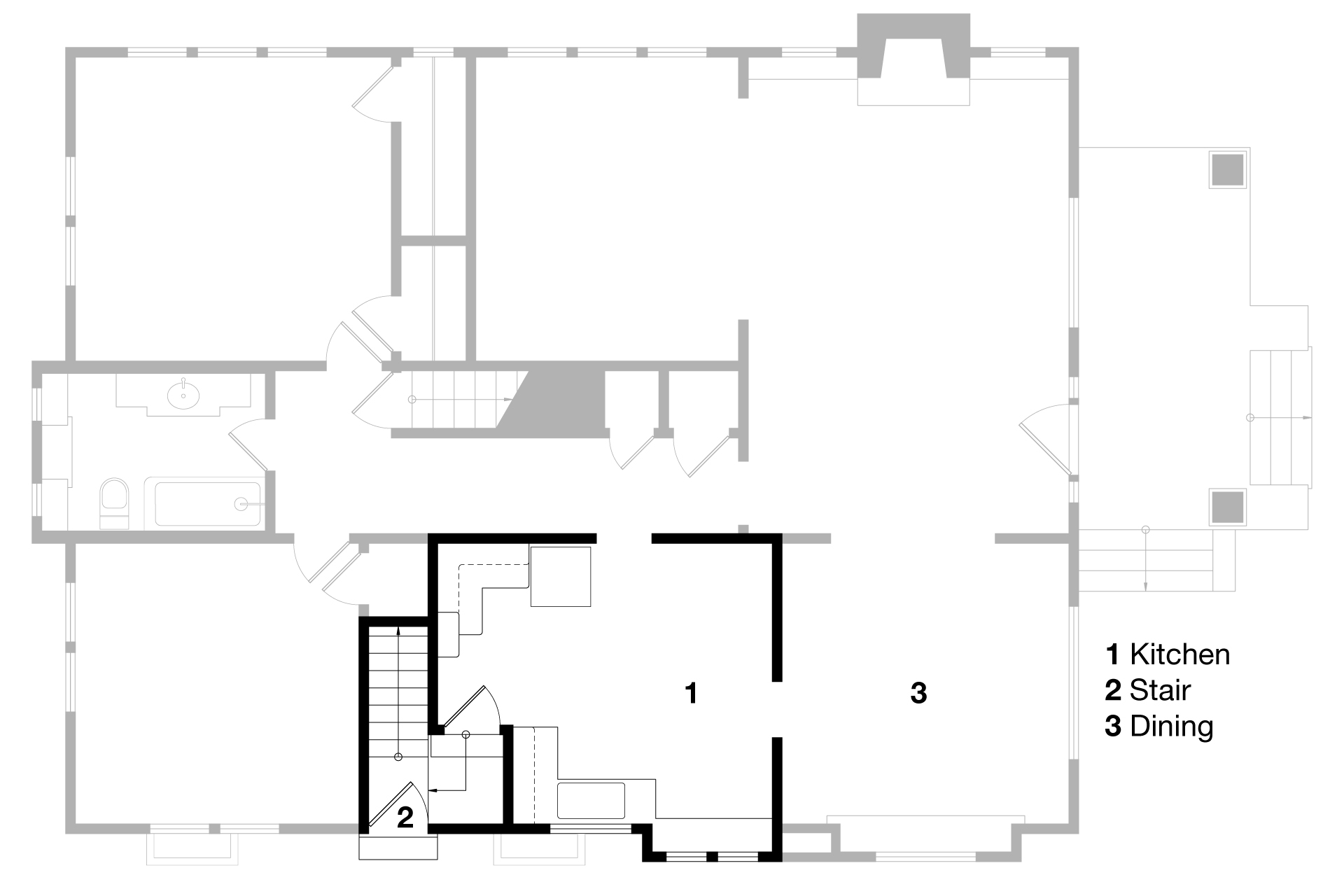
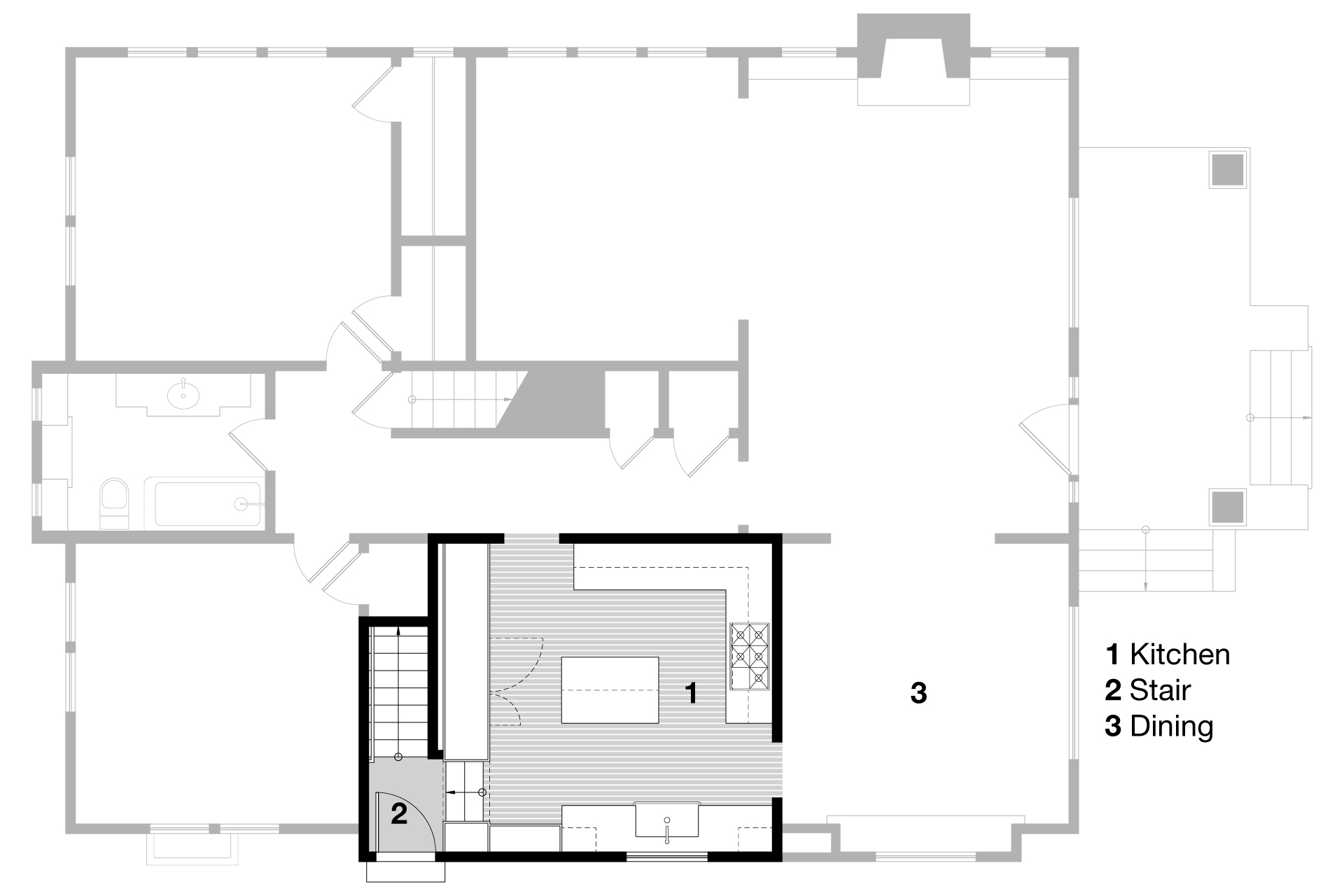
That single move made it possible to rethink everything else. We rerouted the short run of stairs to the back door and basement. We also relocated the openings to the dining room and hall so circulation moved to the edges of the space instead of cutting through it. With clearer circulation and a squared-up footprint, the kitchen now supports generous runs of cabinetry and counter space. A small island—impossible before—now fits comfortably in the room.
A small addition that looks like it’s always been there
While the interior changes transformed how the kitchen works, the addition also needed to feel natural from the outside. Rather than introducing a new form, we extended an existing bump along the exterior wall, carrying it across the length of the addition. This allowed the 18-inch push to read as something the house had always had, rather than a visible afterthought.
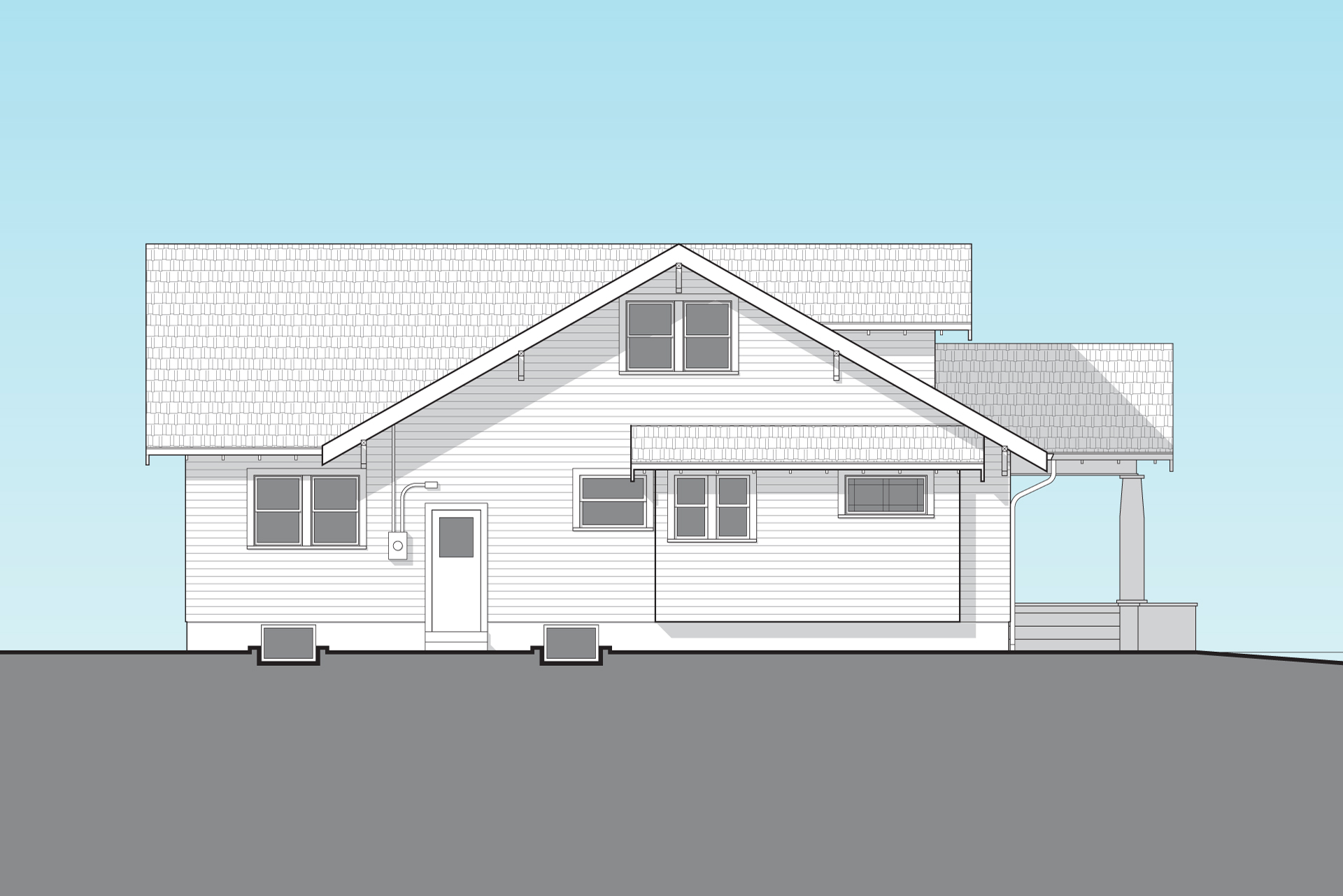
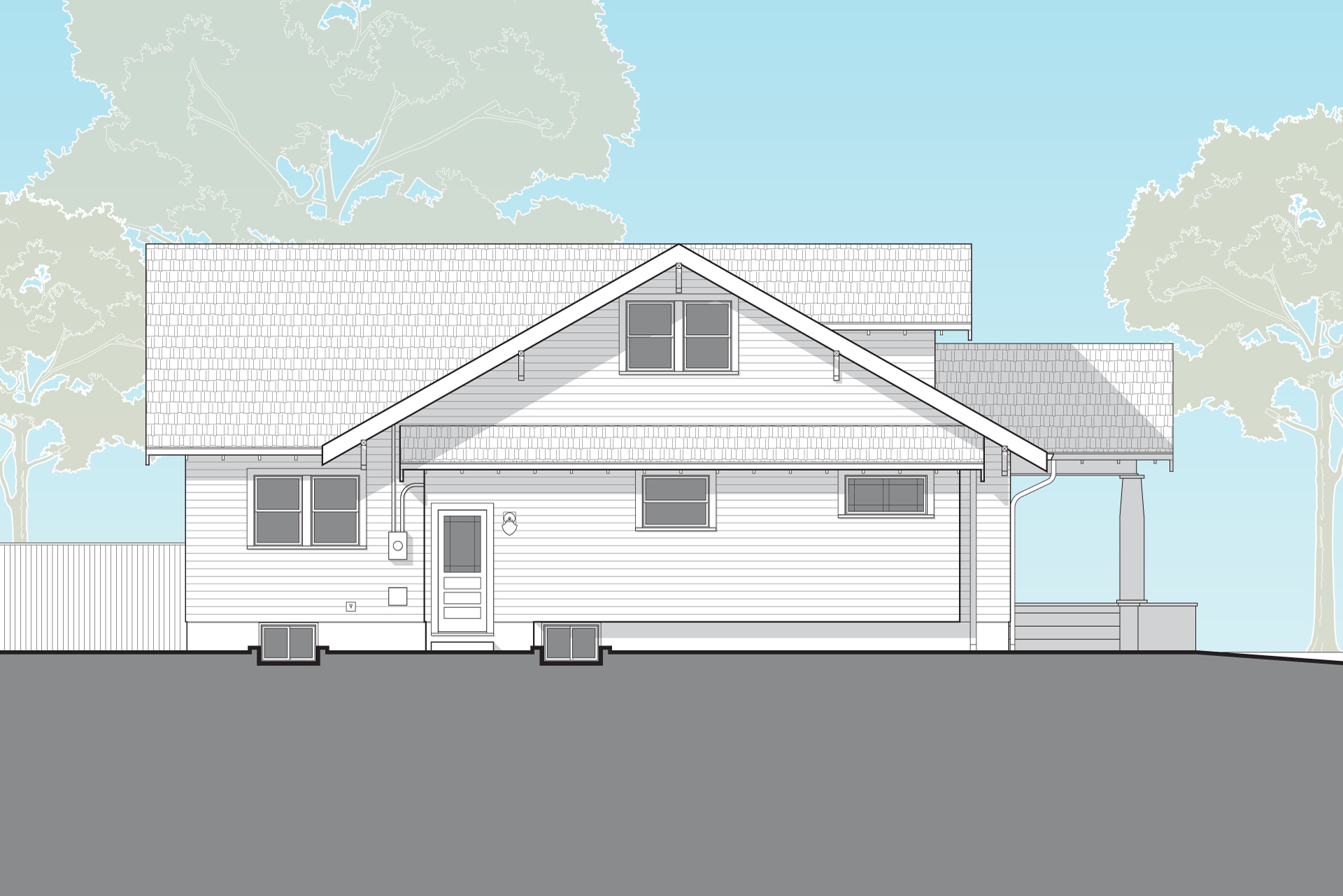
The window layout was simplified at the same time. We replaced several mismatched windows with a single, well-proportioned opening over the sink, creating a calmer, more cohesive exterior. Keeping the window double-hung also maintains the Craftsman character, reinforcing the idea that even meaningful change can feel seamless when thoughtfully integrated.
Starting at the back door
Although it’s technically the back door, this is the way the homeowners come and go every day—arms full of groceries and bags. Just inside, a small landing connects to the kitchen above, with built-in cabinetry dedicated solely to shoe storage. Keeping this area focused and efficient helps contain the mess of daily life right at the door.
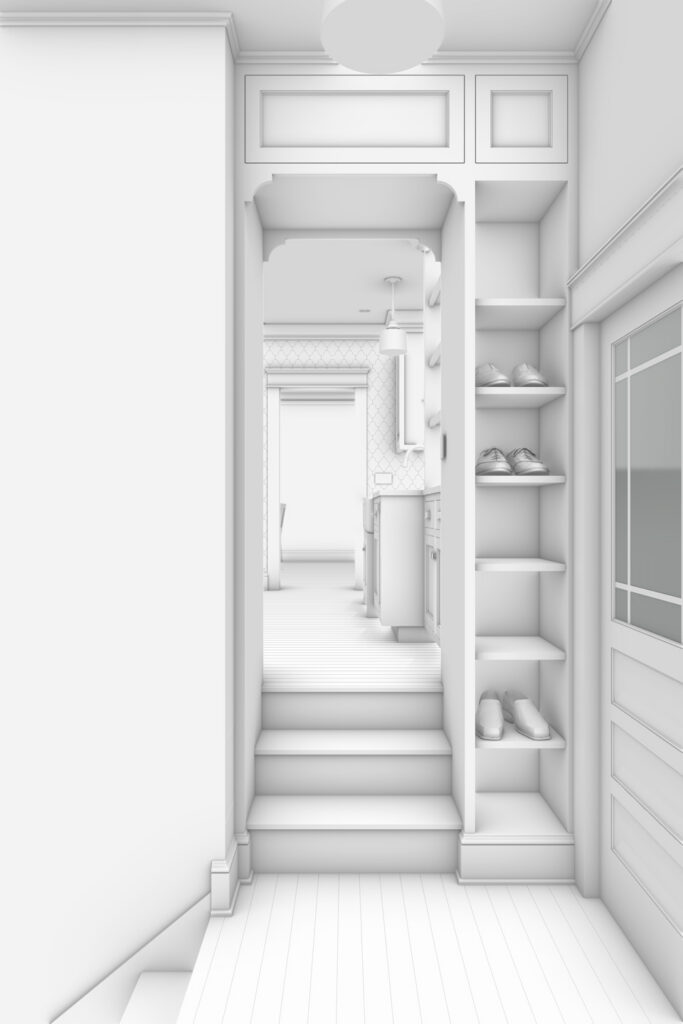
From here, a short run of stairs leads directly into the kitchen, creating a natural transition from entry to workspace. Treating this sequence as part of the overall design—rather than an afterthought—helps the kitchen feel organized from the moment you walk in.
Just up the stairs
At the top of the stair run, the kitchen opens up—and with it, a natural place to land. Built-in cabinetry provides a dedicated spot for everyday essentials like mail and keys. Open shelving offers a home for cookbooks within easy reach. It’s a small but thoughtful transition that reinforces how the kitchen supports daily routines.
The kitchen comes into view
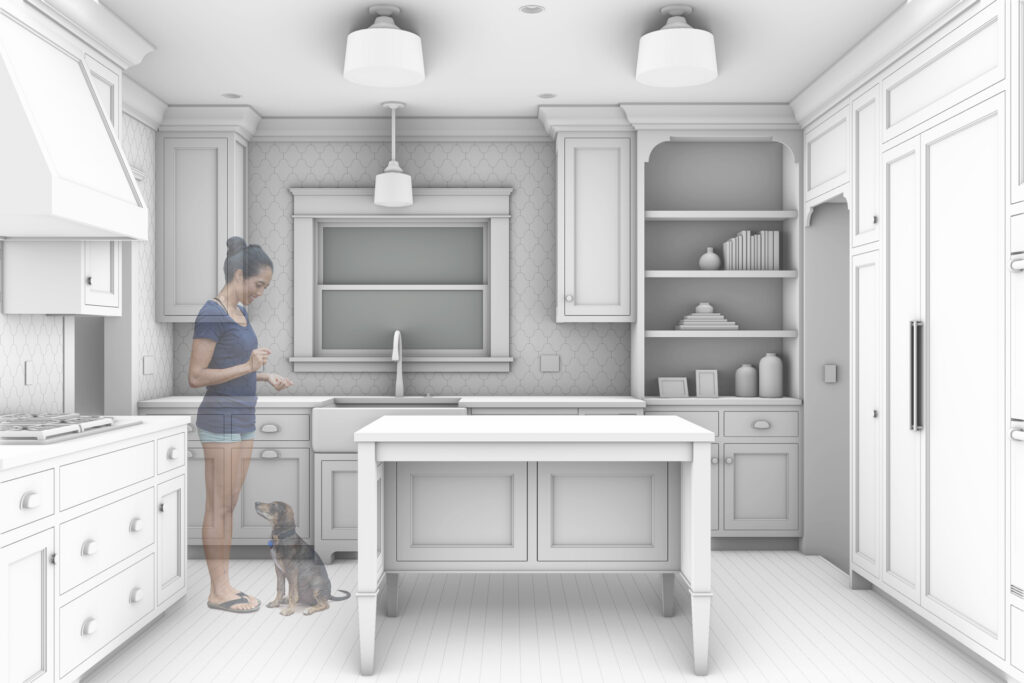
At the heart of the home, the kitchen now reads as a single, well-resolved space rather than a collection of obstacles. Cabinetry lines the room in a calm, continuous way, supporting cooking, gathering, and everyday movement. A built-in stove hood anchors one wall, designed as part of the cabinetry so it feels integral rather than applied.
Tile plays an equally important role in shaping the space. A patterned tile from Fireclay extends beyond a typical backsplash, wrapping three walls of the kitchen and turning them into a defining feature. With the fourth wall fully clad in cabinetry. Every surface is intentional—either storage or tile—reinforcing the sense that the room was designed as a complete whole.
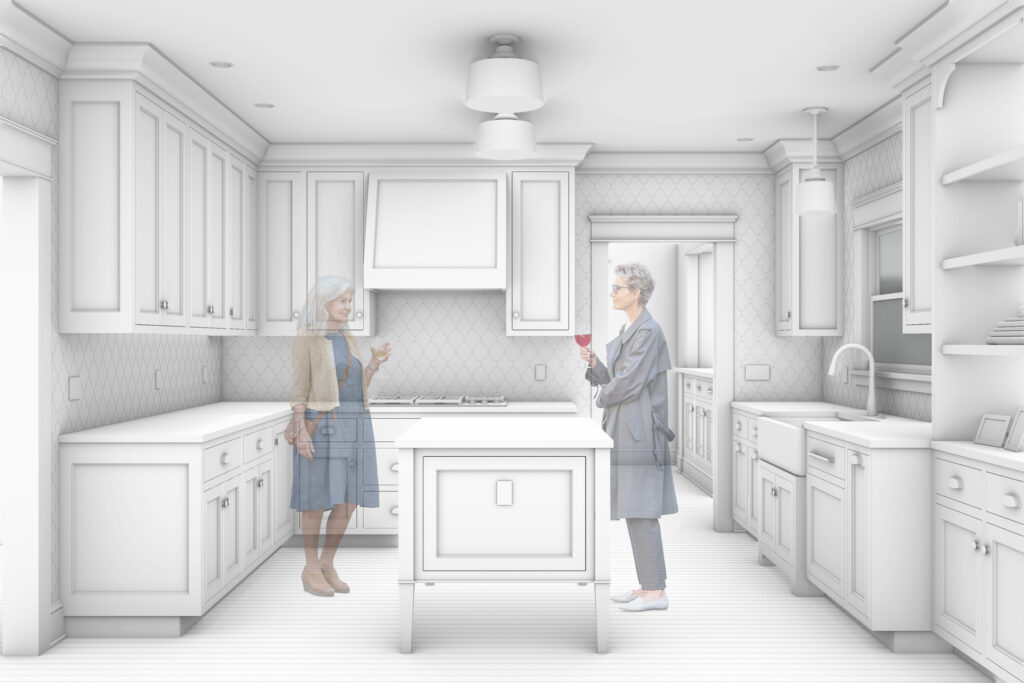
The island fits comfortably within the layout, with seating on one side and storage on the other. Designed like a piece of furniture, it sits on legs that allow the floor to flow beneath, keeping the space open and light. The walnut finish adds warmth and contrast to the painted cabinets.

The cabinetry wall
From this angle, one side of the kitchen reads as a continuous wall of cabinetry, where storage, appliances, and circulation work together. The refrigerator and wall ovens are fully integrated. They recede into the cabinetry rather than reading as a collection of individual elements. An opening within the cabinetry leads back down the stairs. This reinforces the connection between the kitchen and the everyday entry without interrupting the room’s rhythm.

By treating this wall as both storage and passage, the kitchen feels cohesive from every viewpoint—functionally and visually.
Restoring a Missing Piece in the Dining Room
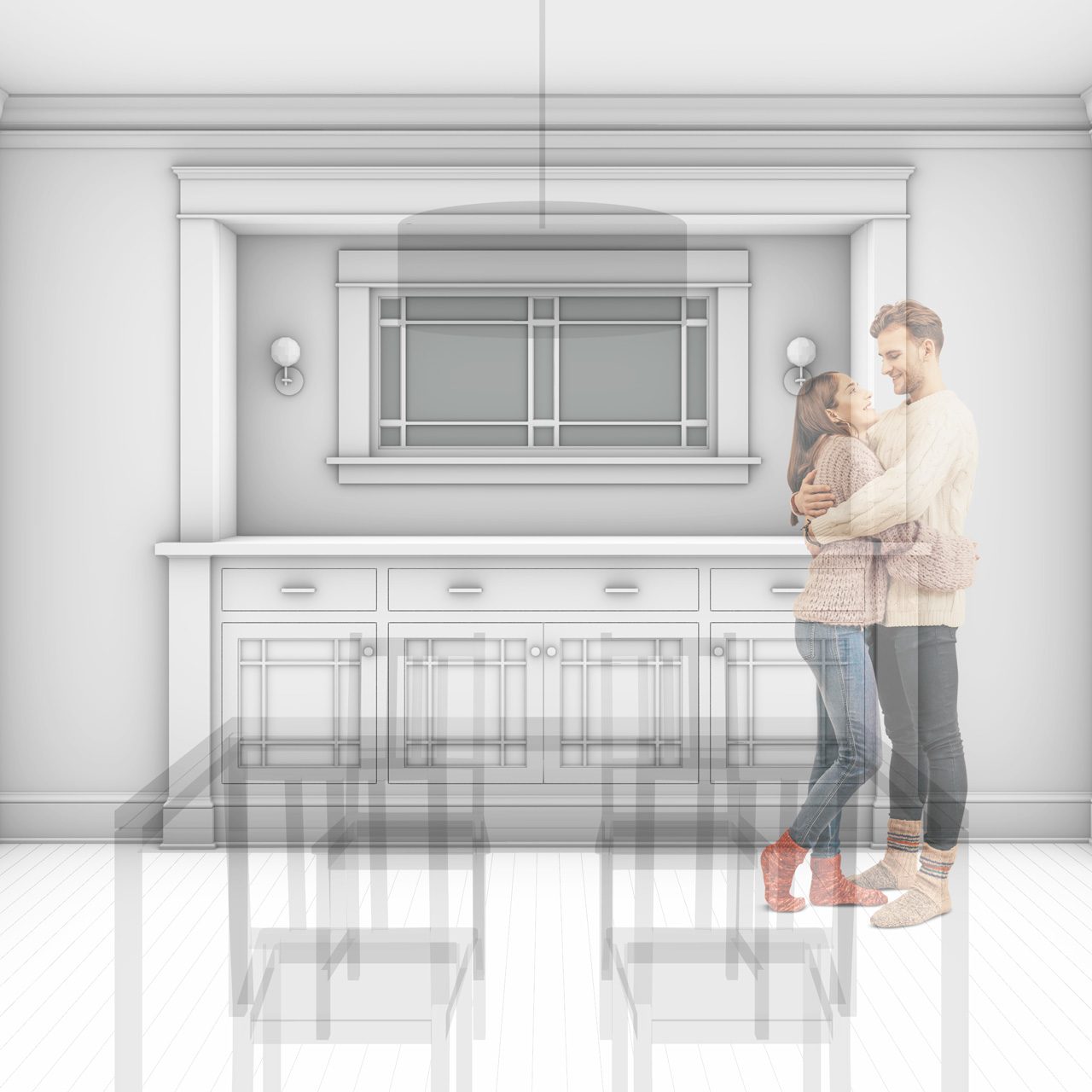
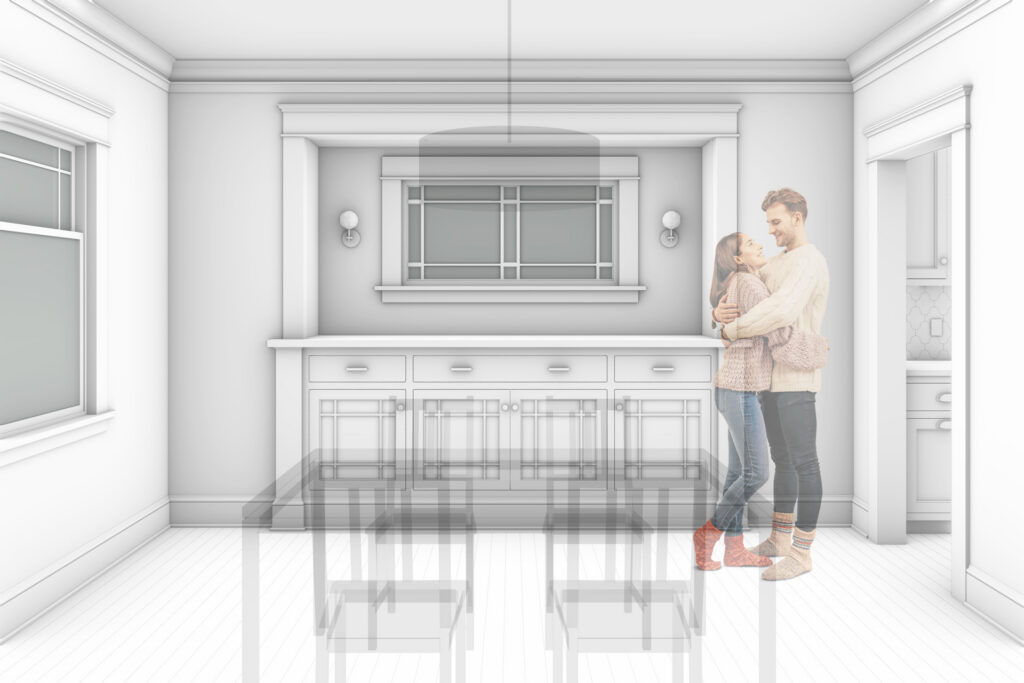
The Craftsman kitchen renovation focused primarily on the kitchen. But the project also created an opportunity to add a small element in the adjacent dining room. Beneath an existing window that felt as though it once anchored a built-in, we designed a custom buffet to restore that sense of completeness. Divided-lite doors echo the window above, while traditional trim and small wall sconces help the piece feel as though it has always belonged there.
A Craftsman kitchen renovation built around everyday use
This renovation shows how thoughtful planning and respect for a historic home can completely transform a kitchen. It changes both how the space functions and how it feels. If you’re considering a Craftsman kitchen renovation and want a space that works beautifully for everyday life, we’d love to talk.