Taylor Building

Location
Portland, OR

Size
20,000 SF

Urban Warehouse Grit

Visit our website on your desktop for more project info.
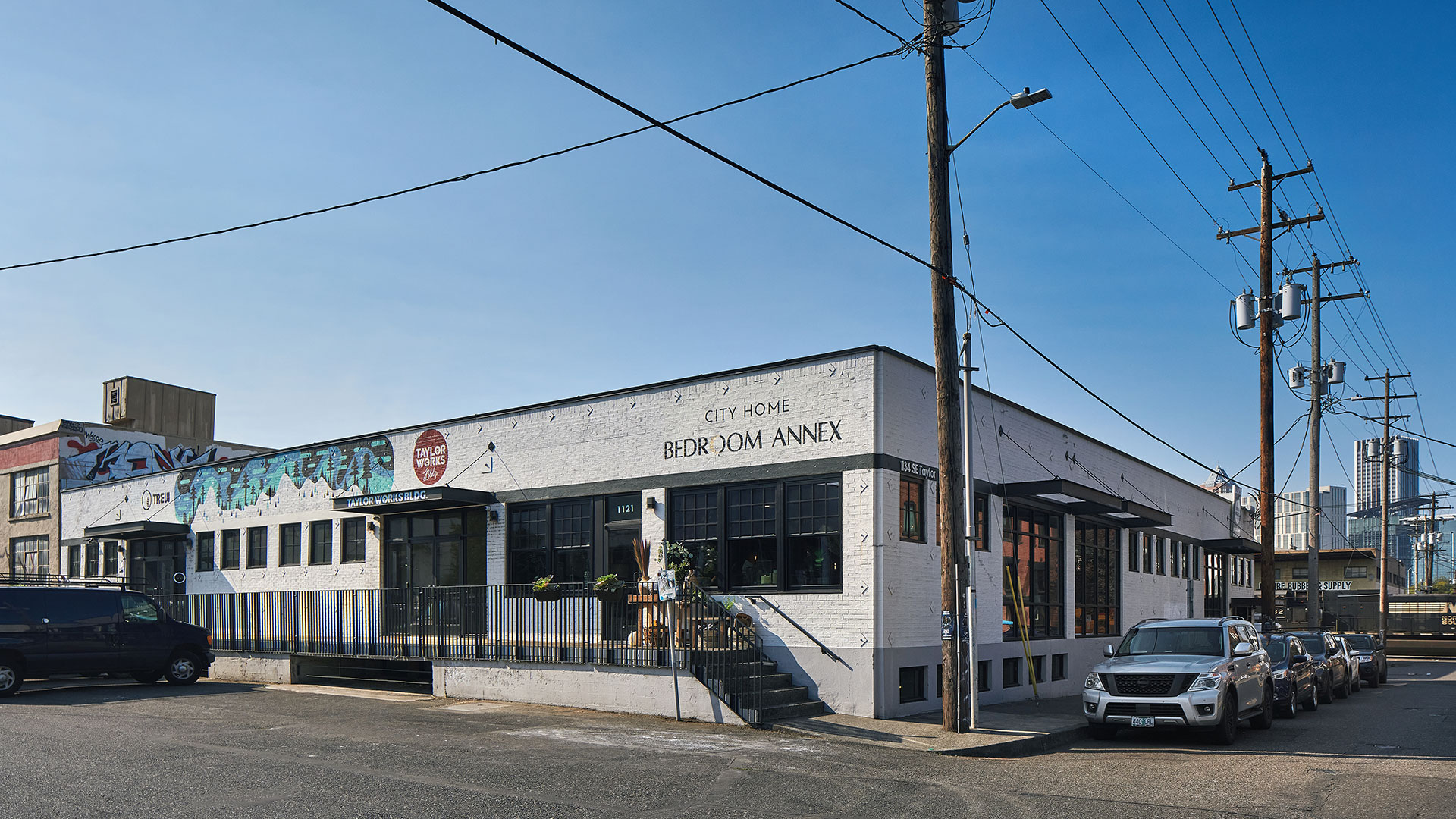
Warehouse renovation of a one-story brick industrial building on a corner lot, featuring a white-painted exterior, black-framed windows, mural signage, and a new entry with metal railing and steps along a quiet urban street.

The Central Eastside Industrial District of Portland features several hundred old warehouses. Many of the buildings are brick and timber structures–a desirable palette of rich materials too expensive to build with today. As this neighborhood grows away from wholesale distribution to retail and office functions, building owners want to renovate rather than tear down. These buildings need a warehouse renovation, and that is exactly what we did with this old building.
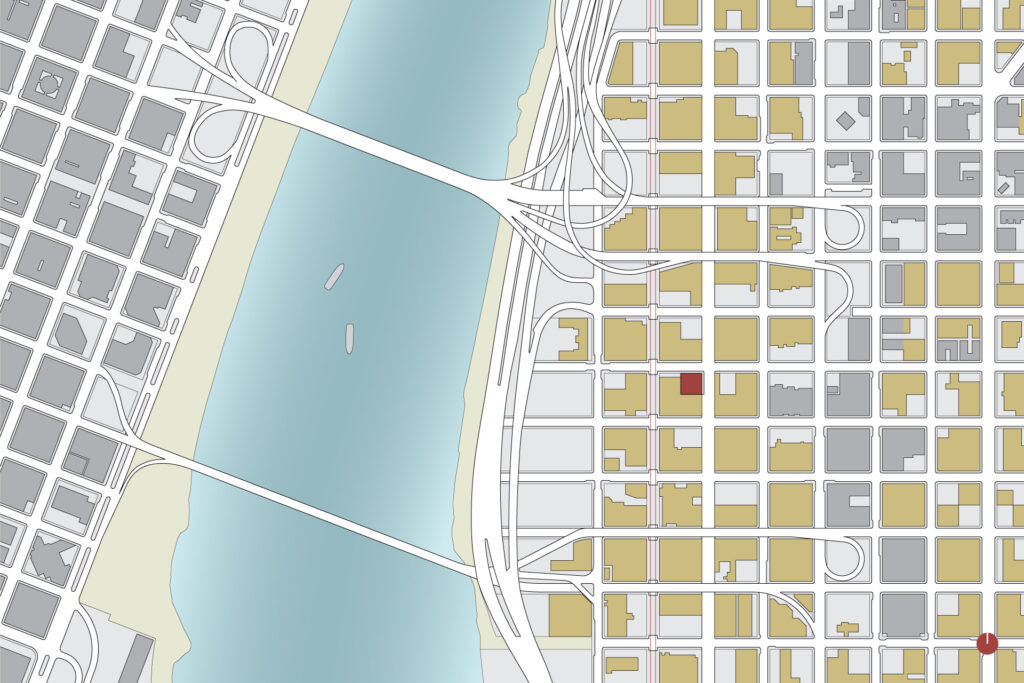
Warehouse renovation site map showing the building location highlighted in red within a dense urban grid near a river, major bridges, and freeway interchanges.
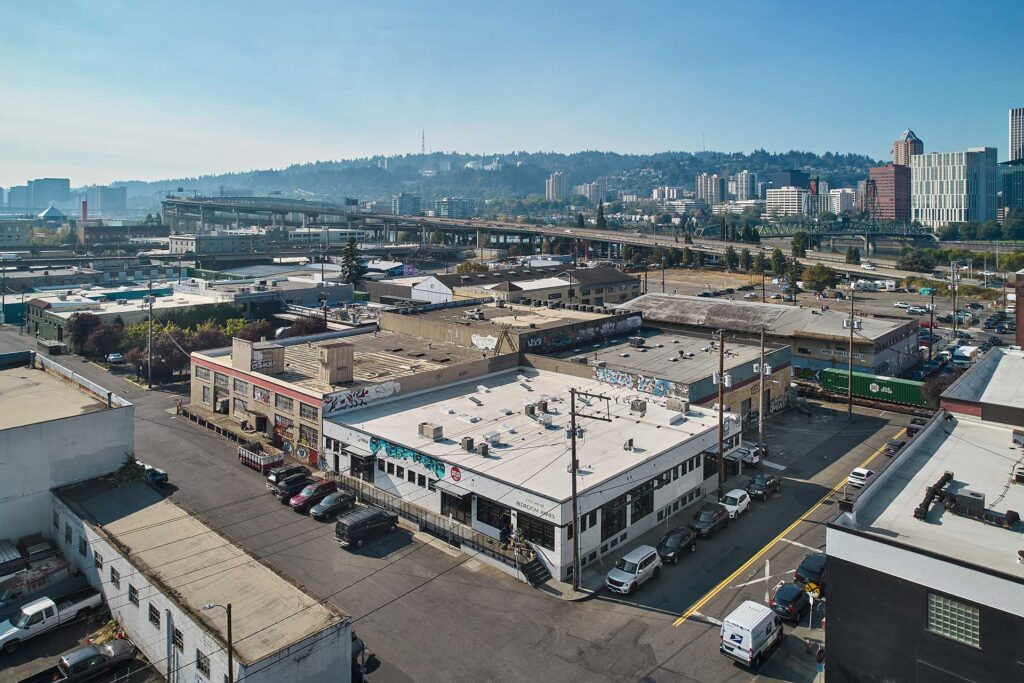
Warehouse renovation of a low-rise industrial block showing the updated white-painted building with black windows, set within a larger urban district of warehouses, rail lines, and elevated highways with a city skyline beyond.

The owners of the Taylor Building anticipated leasing the upgraded 1921 historic structure to a variety of small businesses. Leasable spaces ranged from 1,000 sf up to an entire floor at 10,000 sf.

While it would have been great to keep the old platform freight elevator with its horizontally split double door, it did not provide easy access to the building. Instead, we suggested a new lobby at the northeast corner where the sidewalk dropped to its lowest point. This allowed an accessible entry with an elevator for all the tenants. The original loading dock elevator remained on the east side for walkup entries.

How do we preserve the historic exposed brick and timber vibe when the energy code requires we cover it up?


The charm of this building is in its historic industrial materials. However, to satisfy the energy code, the building needs insulation; it had none at all. We couldn’t cover the exterior since this building sits at the property line. And we didn’t want to reclad it anyway; we liked the brick.

We modeled the building for energy to assess how much wall area we could keep exposed. The highest priority was balancing the need to insulate with the desire to keep the industrial vibe. In the end, we decided the most impactful area to preserve the exposed brick was at the main level entry and lobby. We kept the ceiling as exposed deck by insulating on top of the roof.
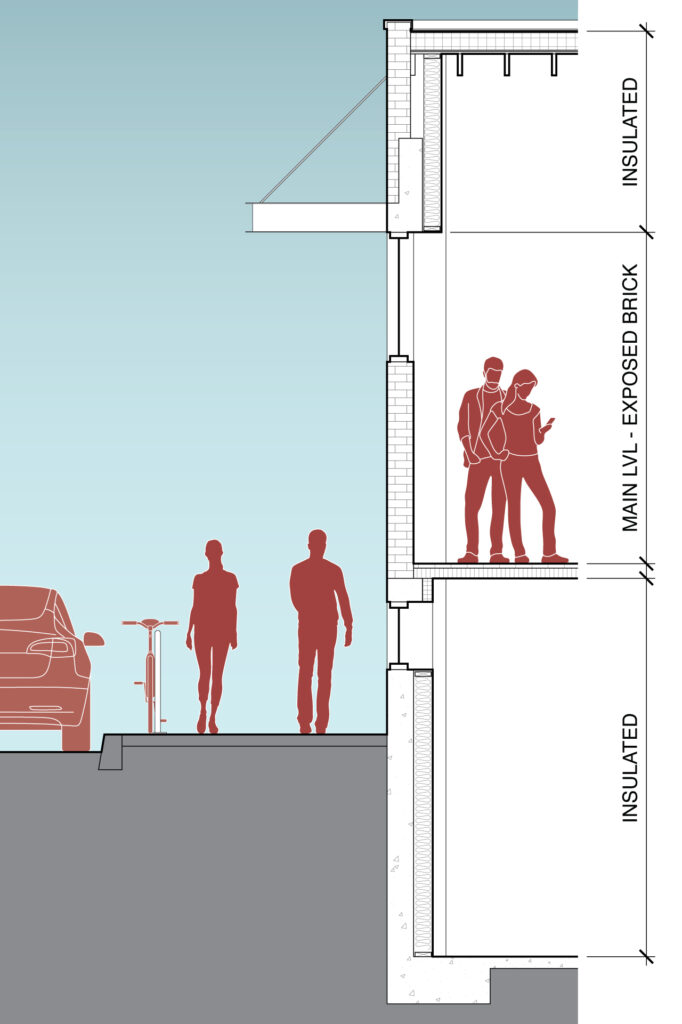
Warehouse renovation wall section diagram showing a brick industrial building upgraded with interior insulation, new floor structure, and exposed brick at the main level, with sidewalk, parking, and pedestrian scale figures for context.
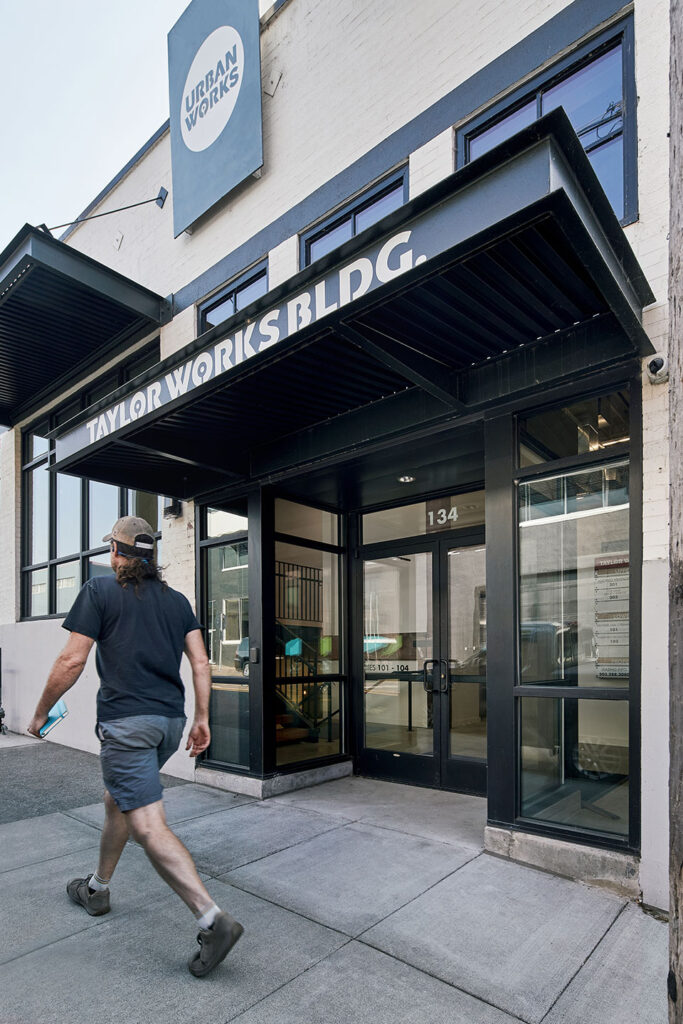
Warehouse renovation entry with a black steel canopy reading “Taylor Works Bldg.”, glass storefront doors, and updated black-framed windows set into a white-painted brick facade along the sidewalk.
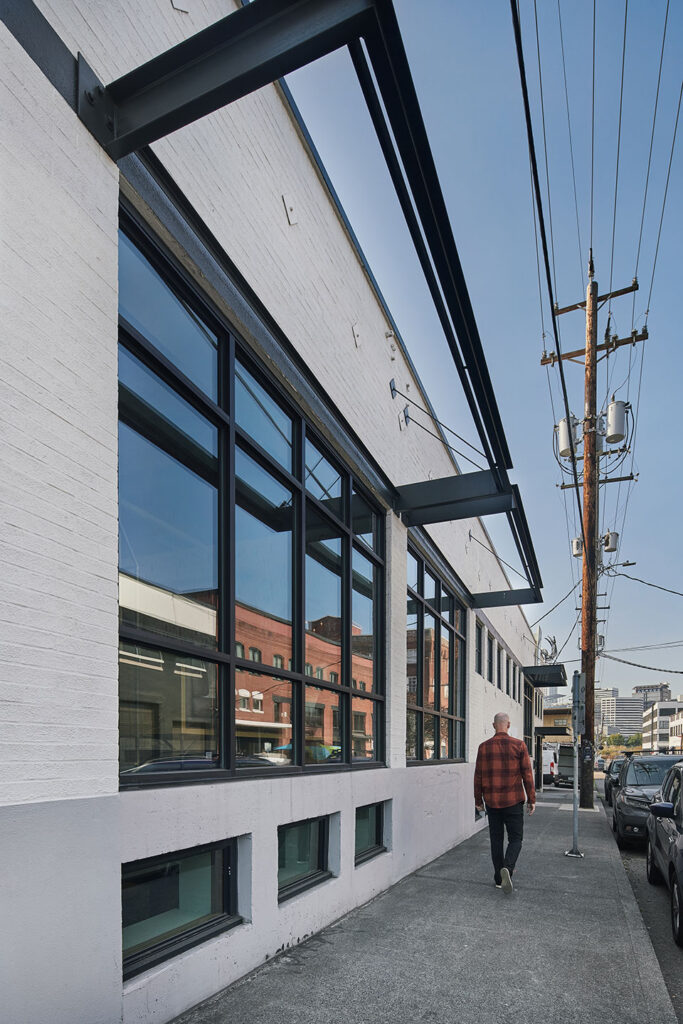
Warehouse renovation exterior showing a long white-painted brick facade with new black-framed industrial windows and steel canopies along the sidewalk, with a pedestrian walking past parked cars on an urban street.
Hover over image to move slider.
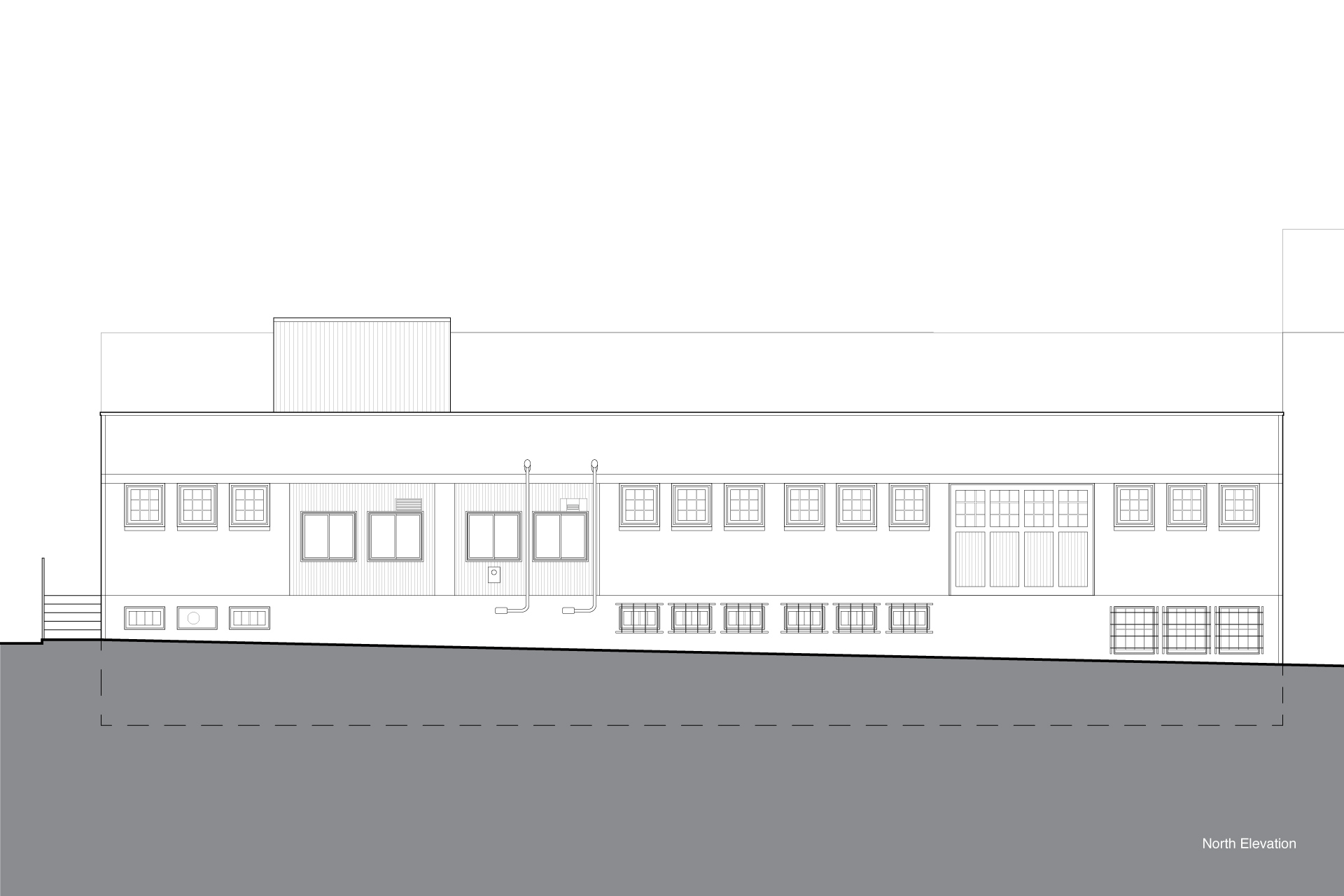
Existing warehouse building elevation drawing showing a long one-story industrial facade with small punched windows, utility connections, and service doors prior to the warehouse renovation.
Before
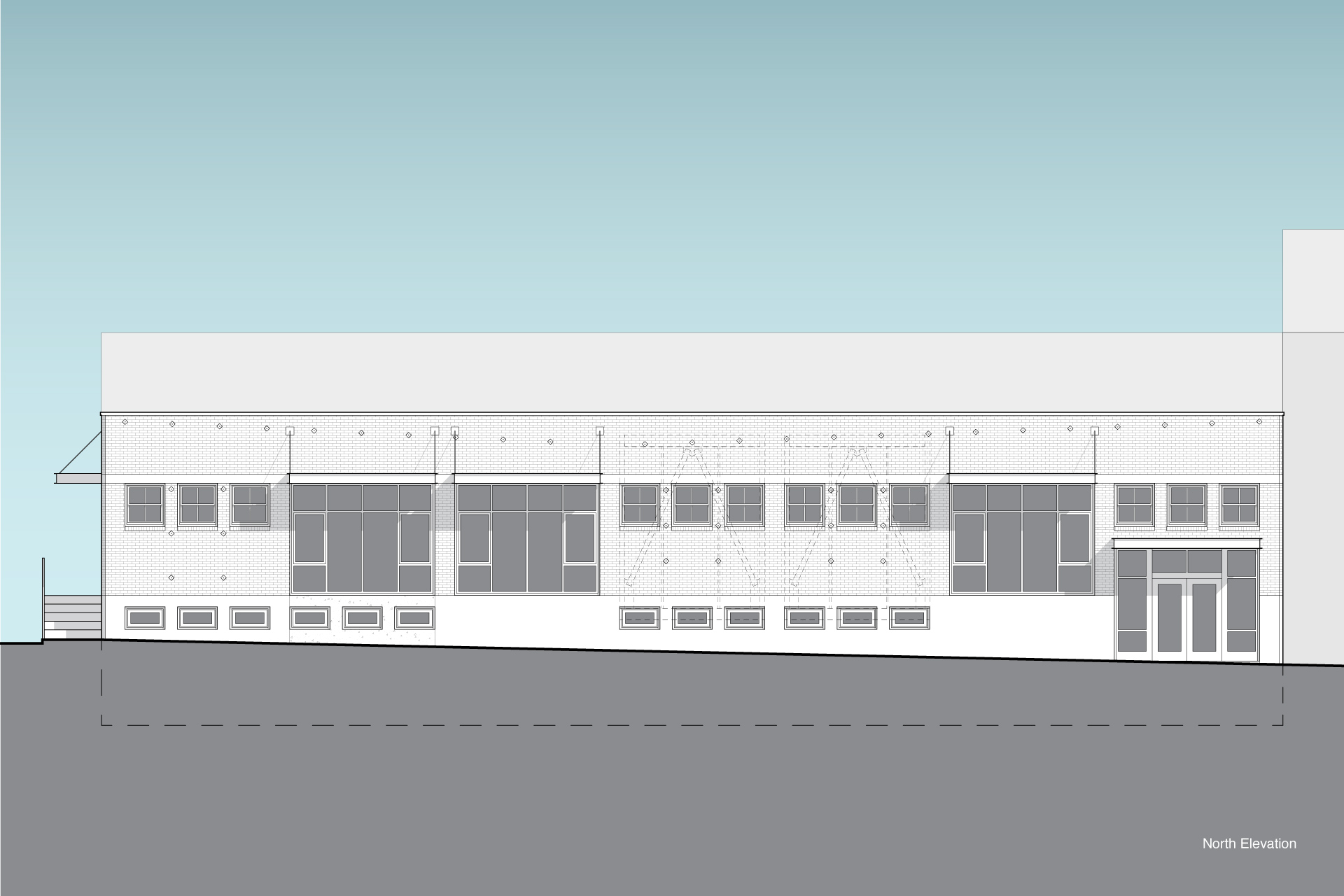
Warehouse renovation elevation drawing showing the updated facade with enlarged black-framed window openings, a new glazed entry, and a refined brick exterior composition.
After
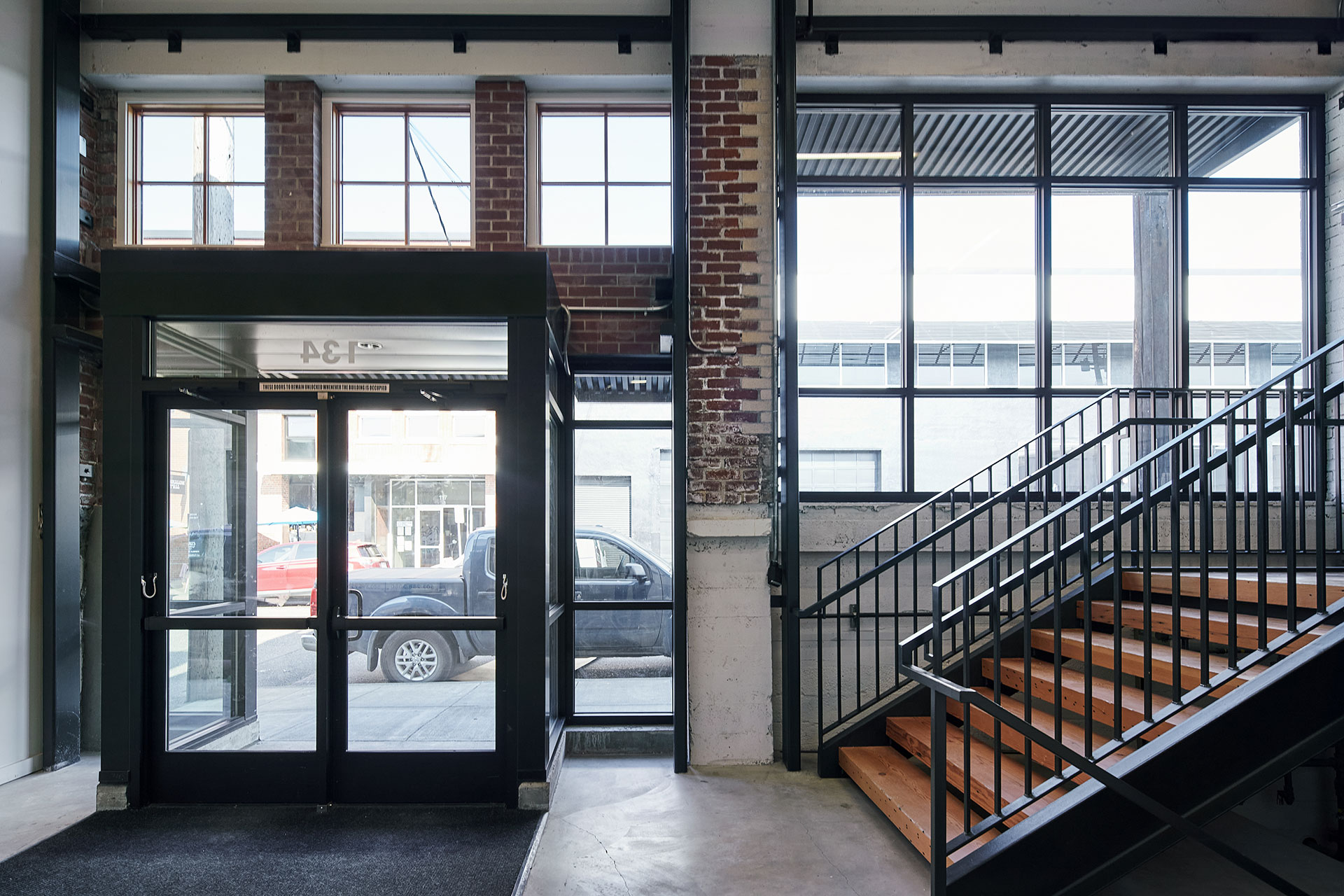
Warehouse renovation interior showing a light-filled entry with black steel storefront doors, large industrial windows, exposed brick and concrete walls, and a new steel stair with wood treads.

Structural engineers call these old buildings URM’s: “Un-Reinforced Masonry” buildings.

Although Portland is in a high seismic area, we didn’t recognize the need to reinforce buildings appropriately until the 1990’s. And in 2004, it became a requirement for owners to seismically upgrade their buildings as they renovated them.

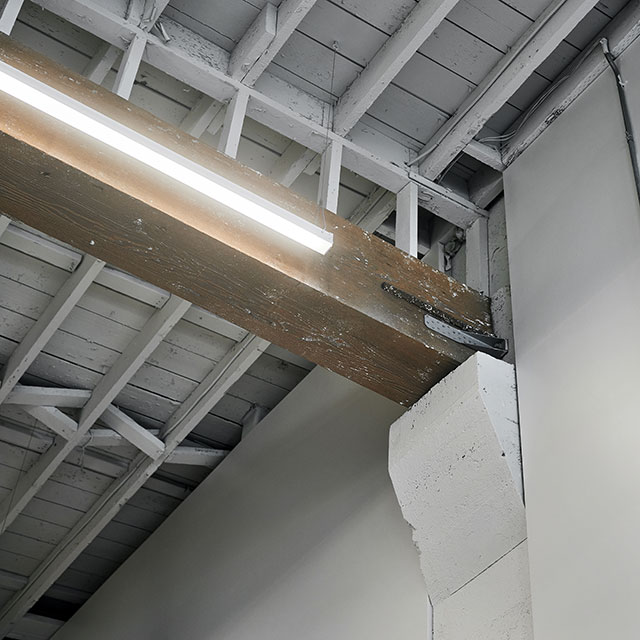
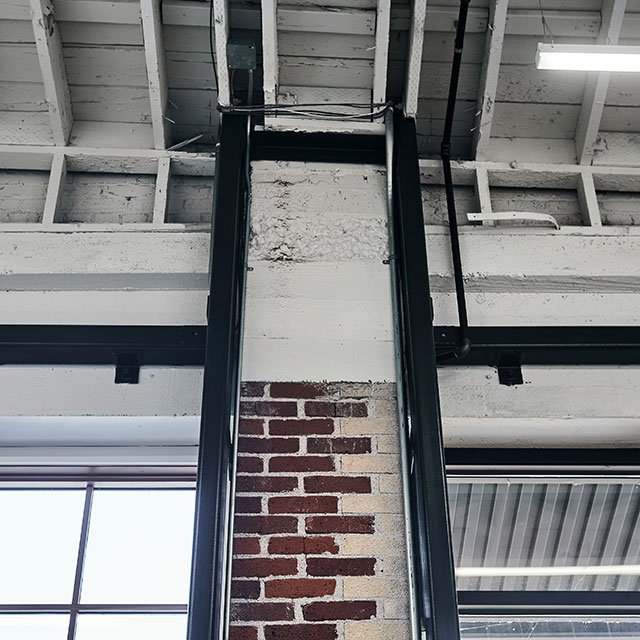
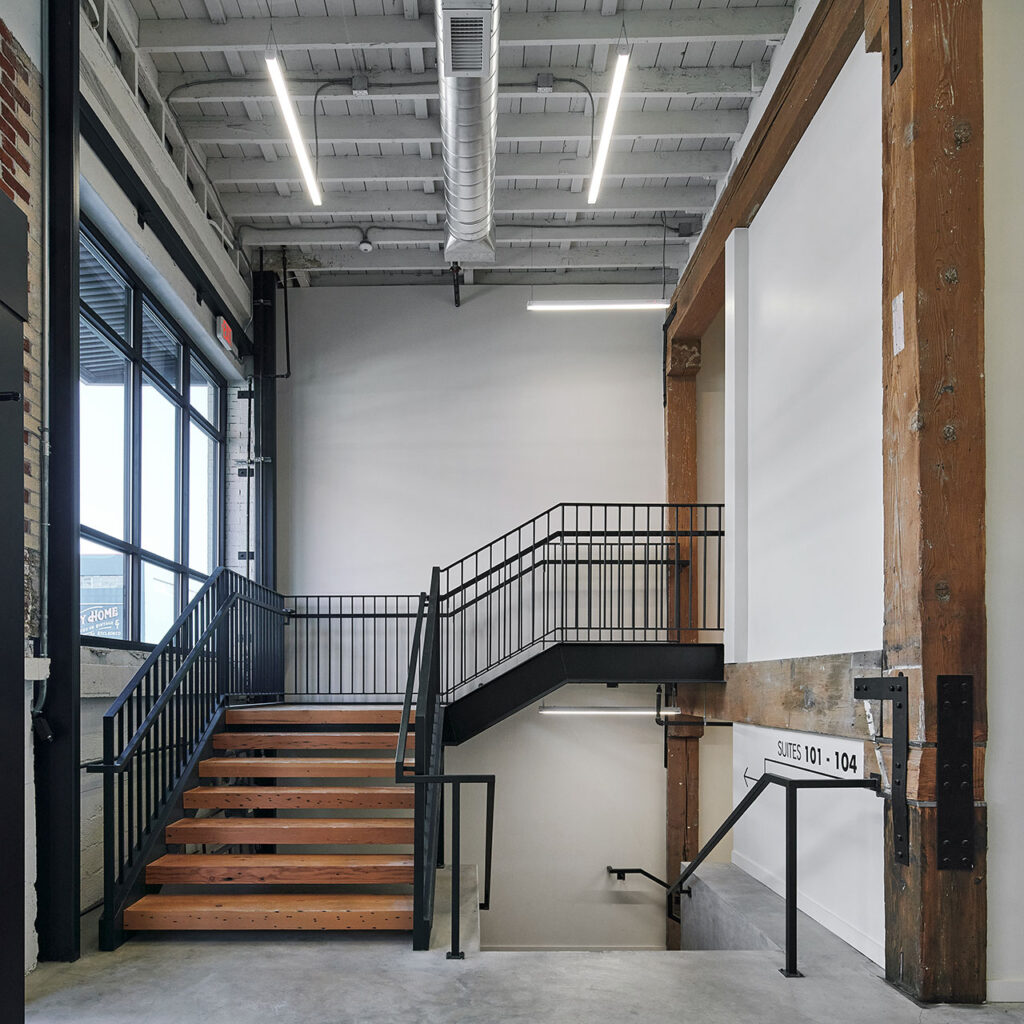
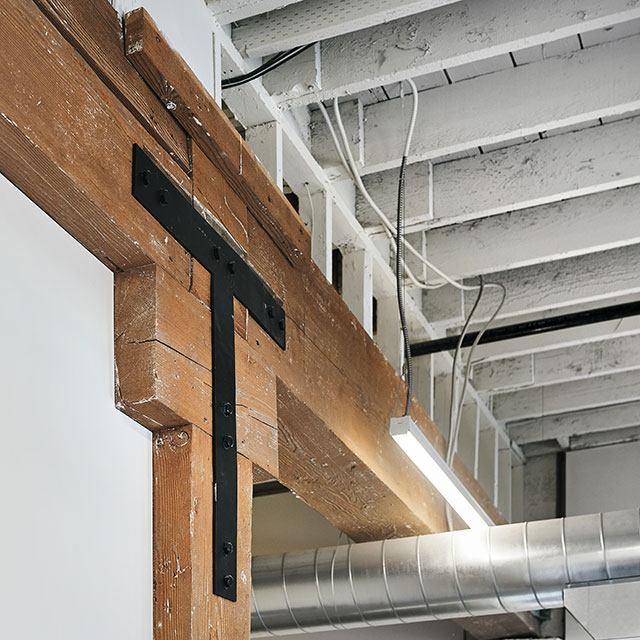
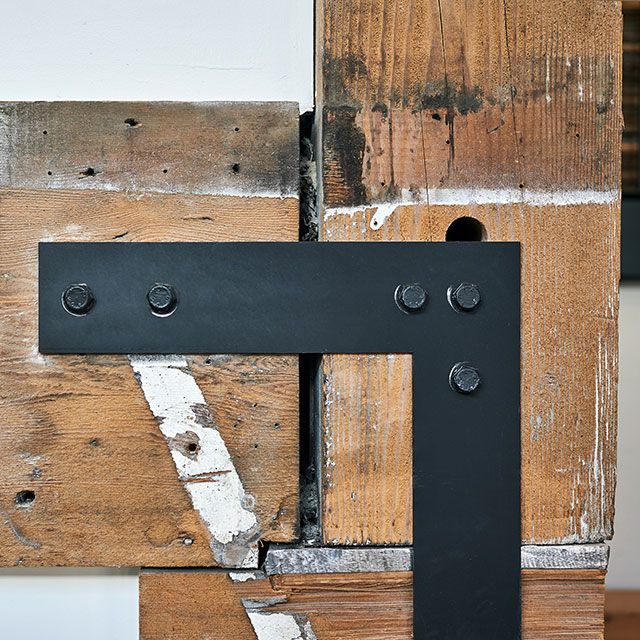
For this warehouse renovation, we created steel frames on each exterior wall to brace the building without covering up the brick. At the old timber beam and column intersections, brackets, plates and holddowns stitch the old framing together with modern reinforcements. Though seemingly perilous-looking, the timbers with these reinforcements do the job, extending the life of this already 100-year old building.
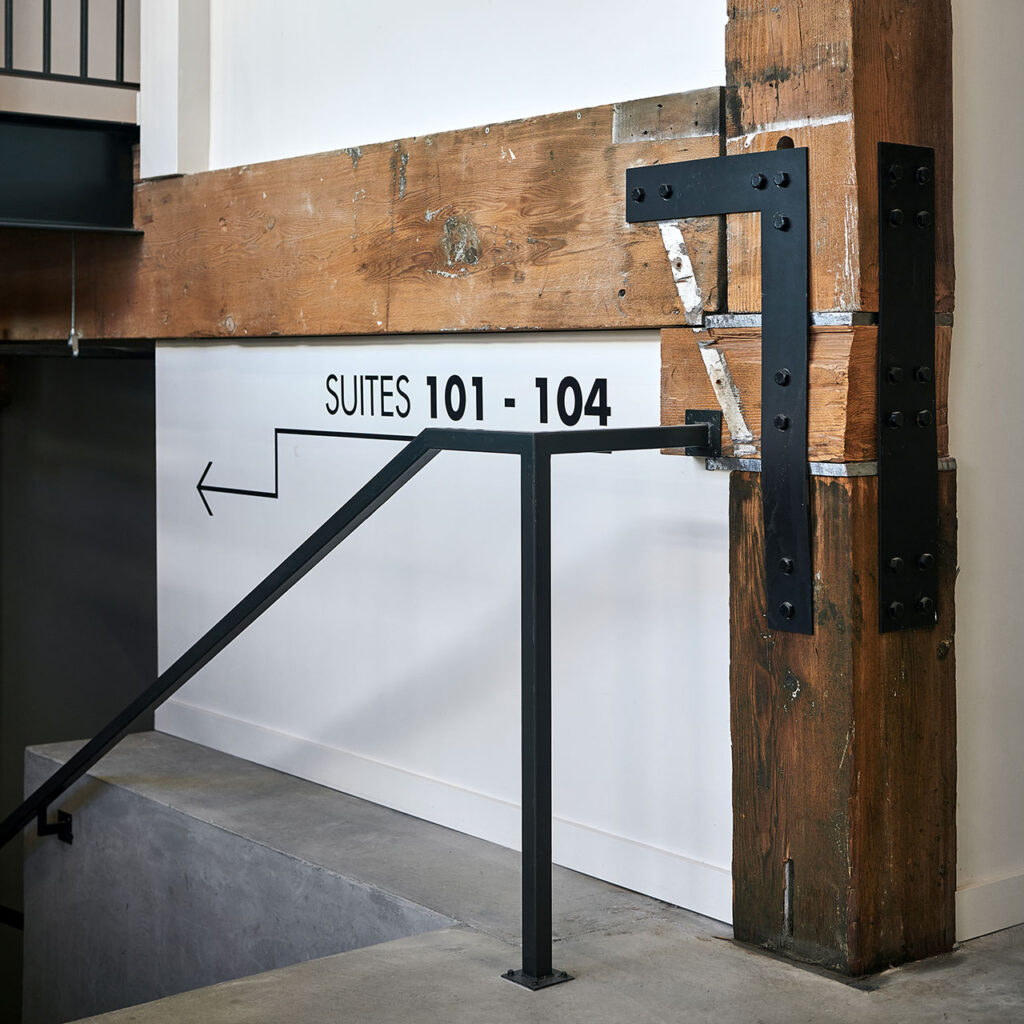
Interior detail showing an exposed timber column with black steel reinforcement plates, a metal handrail, and directional wall signage reading “Suites 101–104.”
Interior detail of an exposed timber beam and column with black steel reinforcement bracket, set below a white-painted ceiling with exposed structure and mechanical ductwork.

A cool detail we discovered about the old building during the warehouse renovation was the blocks between the beams at the roof. Apparently, these were placeholders for a future expansion of the building. The blocks could hold timber columns to support new upper floors.
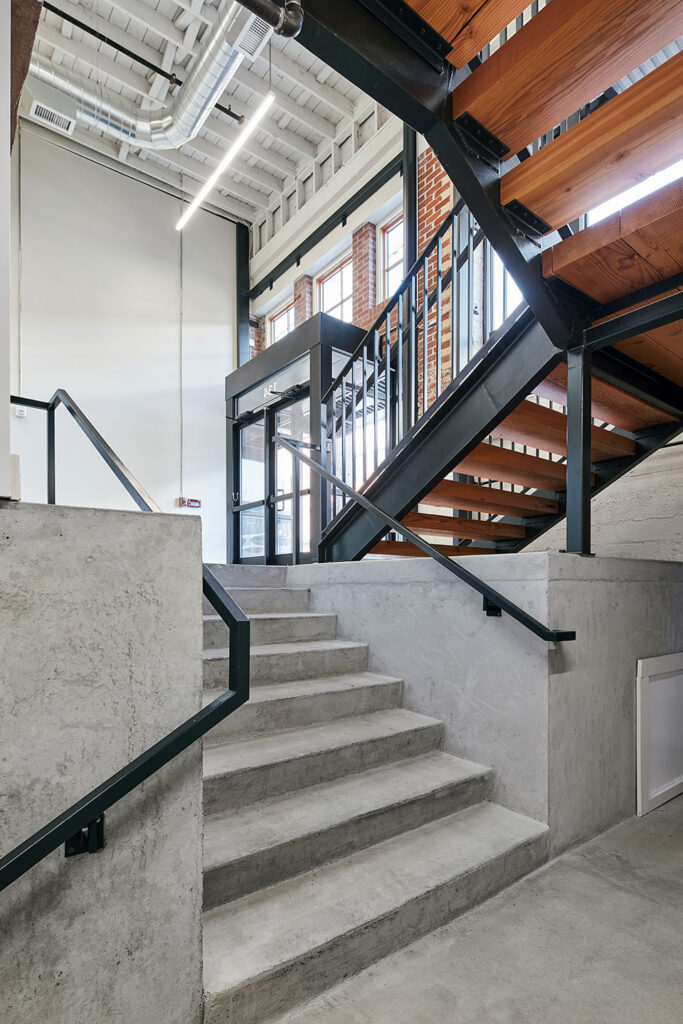
Warehouse renovation interior featuring a concrete stair with black steel railing, an open steel stair with wood treads, exposed brick walls, and a white-painted ceiling with visible ductwork and structure.
Close-up detail of an exposed timber beam connection reinforced with a black steel bracket and bolts, showing layered wood members and original construction marks.
Interior detail of an exposed timber beam bearing on a concrete wall, with a white-painted wood roof structure and linear light fixture above.
Interior detail of a steel column reinforcing an existing masonry wall, with exposed brick below, white-painted concrete above, and a wood roof structure with visible utilities overhead.
Warehouse renovation interior featuring an open steel stair with wood treads, black metal railings, exposed timber columns with steel reinforcement, and a white-painted ceiling with visible ductwork and linear lighting.

Timbers removed during demolition became stair treads in the new lobby. Old nail holes and the scars of 100 years of heavy duty performance add to the industrial vibe of the warehouse renovation.
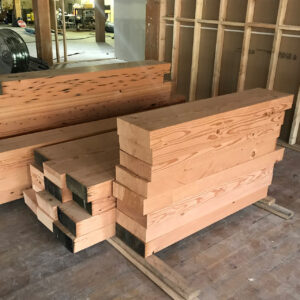
Stacked heavy timber beams with fresh cut ends, stored on a construction site floor beside framed walls and materials.
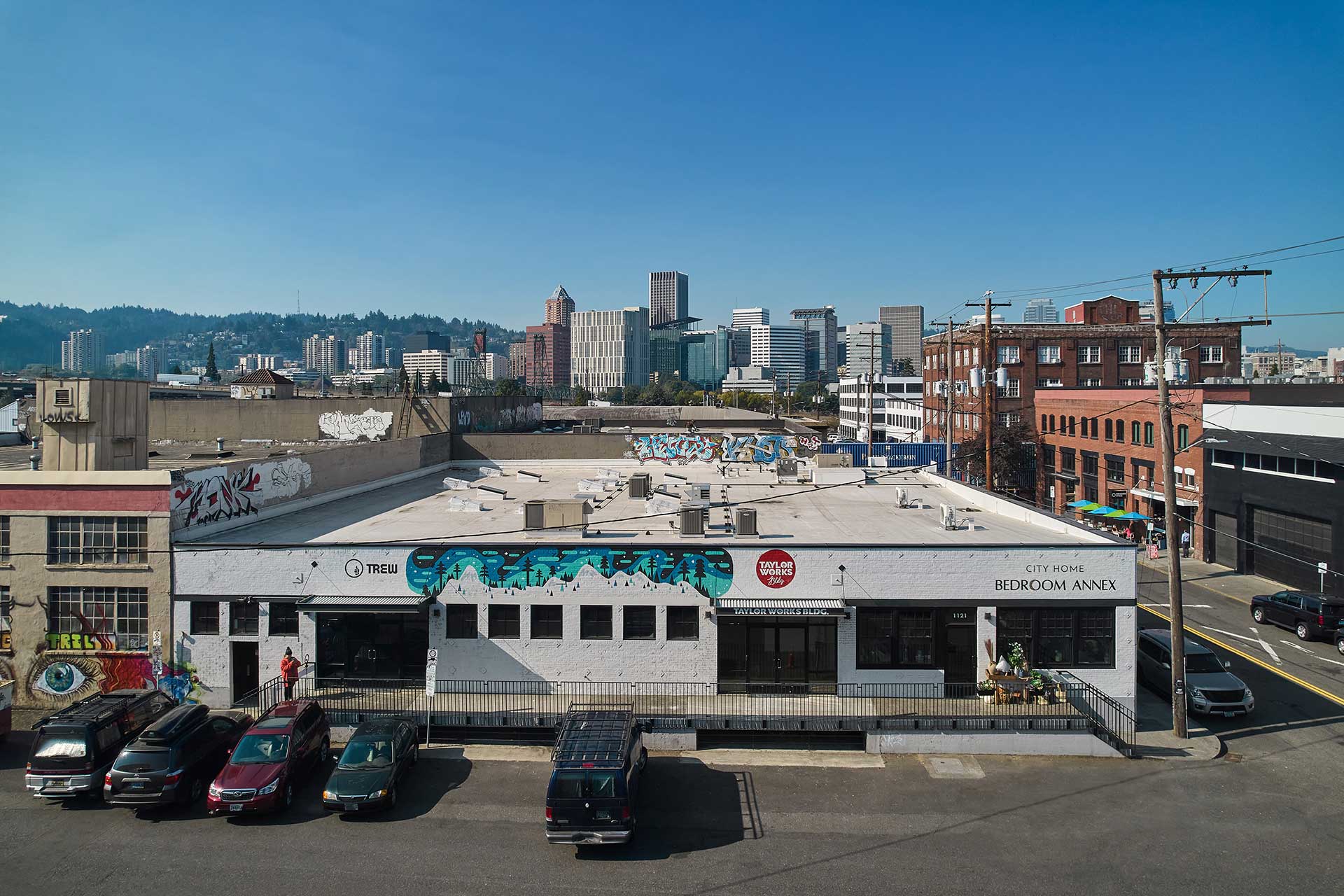
Warehouse renovation of a one-story industrial building with a white-painted brick facade, mural signage, and updated storefronts, set against a downtown skyline with parked cars in the foreground.