
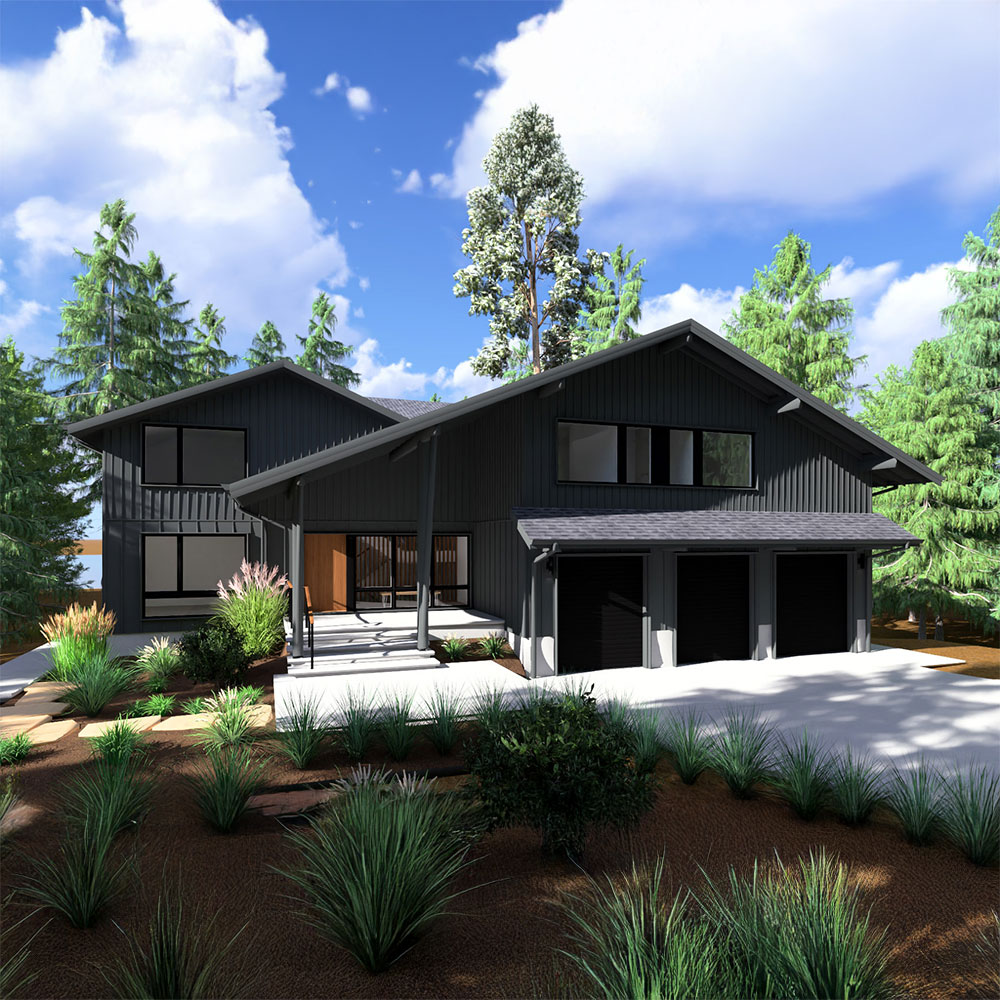
Set along the Willamette River in Wilsonville, Oregon, this remodel reimagines a 1970s house for a new chapter of life. Designed for a retired couple and their growing family, the project transforms a dated river home into one that supports everyday living while making the most of its incredible setting.
A house out of step with its setting
Despite its incredible location, the existing house never fully took advantage of the site. Originally built in the 1970s, the house consisted of a simple box with a garage set off to the side. A narrow breezeway connected the two, leaving the arrival sequence exposed and unclear.
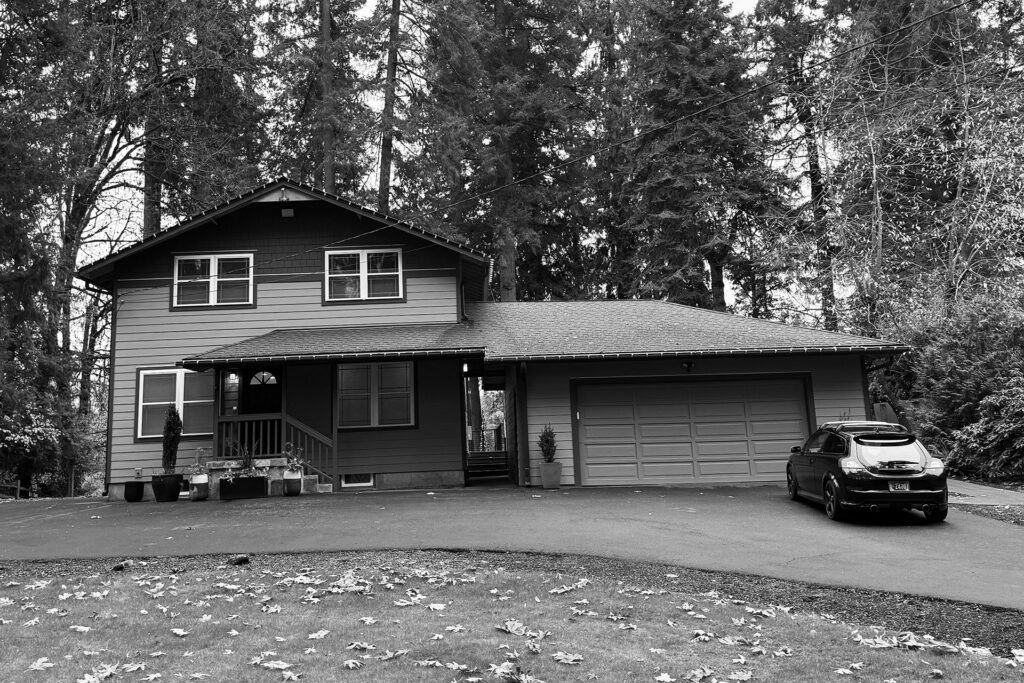
Over time, a series of interior changes only compounded the issues. Circulation became increasingly convoluted, with multiple stair locations and a split level between the house and garage. Everyday movement felt disjointed. The kitchen struggled within the plan, and large open areas created inefficiencies rather than flexibility. At the same time, the overall massing worked against the house—the garage dominated the approach, visually overwhelming the main living spaces and diminishing the presence of the home itself.
The result was a house that felt disconnected at nearly every level: from the way you arrived, to how you moved through it, to how it related to the site.
A new set of priorities
For the homeowners—now living here full time—the house needed to function very differently. What had once been a loosely organized vacation house needed to support everyday life while still accommodating extended family along the river—something this remodel set out to address.
Improving kitchen circulation and function was critical, along with adding additional bedrooms for visiting family and a dedicated primary suite. Resolving circulation across all three levels of the house was equally important. Finally, the garage needed to support life on the river, with space for a boat, vehicles, and workspace—without overwhelming the house itself.
Reworking the plan for clarify and connection
The first floor centers on a single, clear move: a central stair that resolves the level change between the garage and the house. An intermediate landing eliminates the need for multiple stairs and creates a direct connection between arrival and the main living spaces. From the garage, you are only a half story away from the heart of the house.
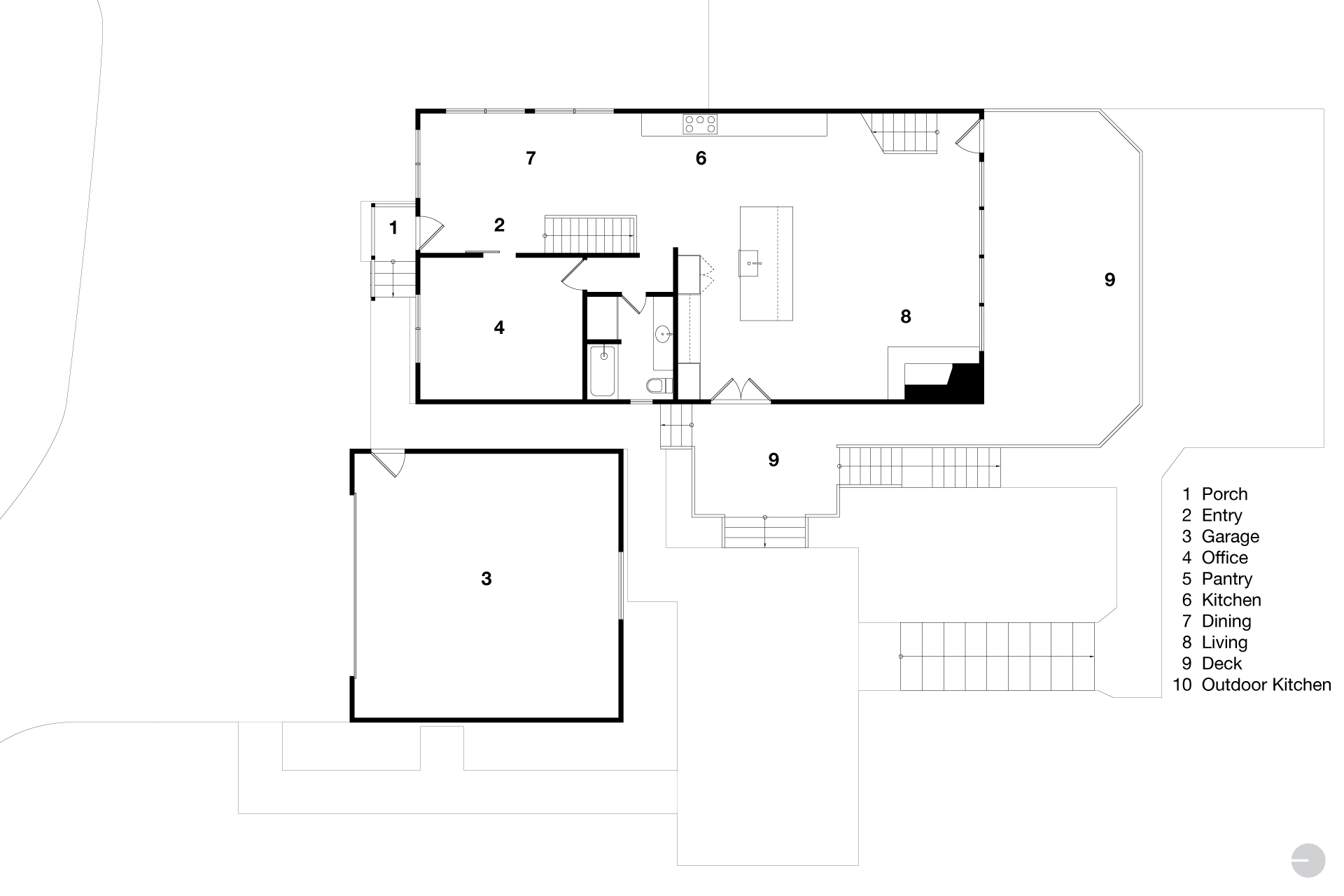

This approach also makes room for a defined entry—something the original house lacked. Instead of arriving into a leftover condition, there is now a clear point of entry that connects directly to the center of the home.
At the same time, the main floor was reworked to support everyday use. The kitchen now anchors the home, connected to adjacent dining and living areas. This corrects the previous layout—where the dining room sat near the front door—and creates a more natural relationship between spaces used throughout the day.
A more practical second floor
Upstairs, that same move brings clarity to the layout of the private spaces. The second floor now supports full-time living, with the reintroduction of additional bedrooms alongside a dedicated primary suite.
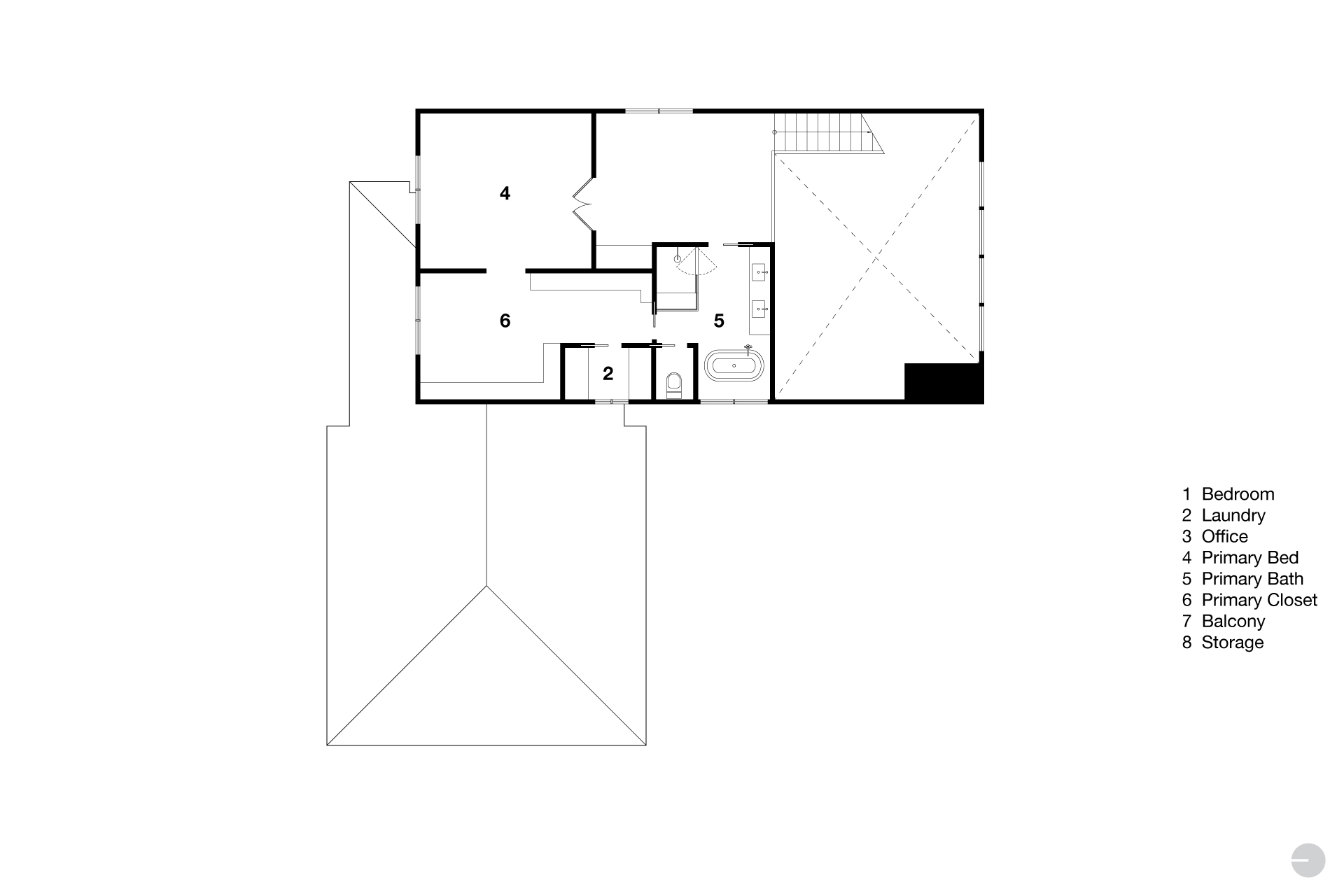

The primary suite faces the river and expands to include a generous walk-in closet and a large bathroom with a double shower and soaking tub. Secondary bedrooms group separately, creating a clear distinction between spaces for the homeowners and those for visiting family.
A small office and an upstairs laundry room—relocated from the basement—support day-to-day living.
A clearer, more cohesive exterior
A single, unifying move reshapes the house from the outside: a large gable roof that brings clarity and hierarchy to the overall form. Drawing on the logic of traditional timber structures—steep roofs, deep overhangs, and exposed framing—the design adapts those ideas to the Pacific Northwest in a simplified, contemporary way.
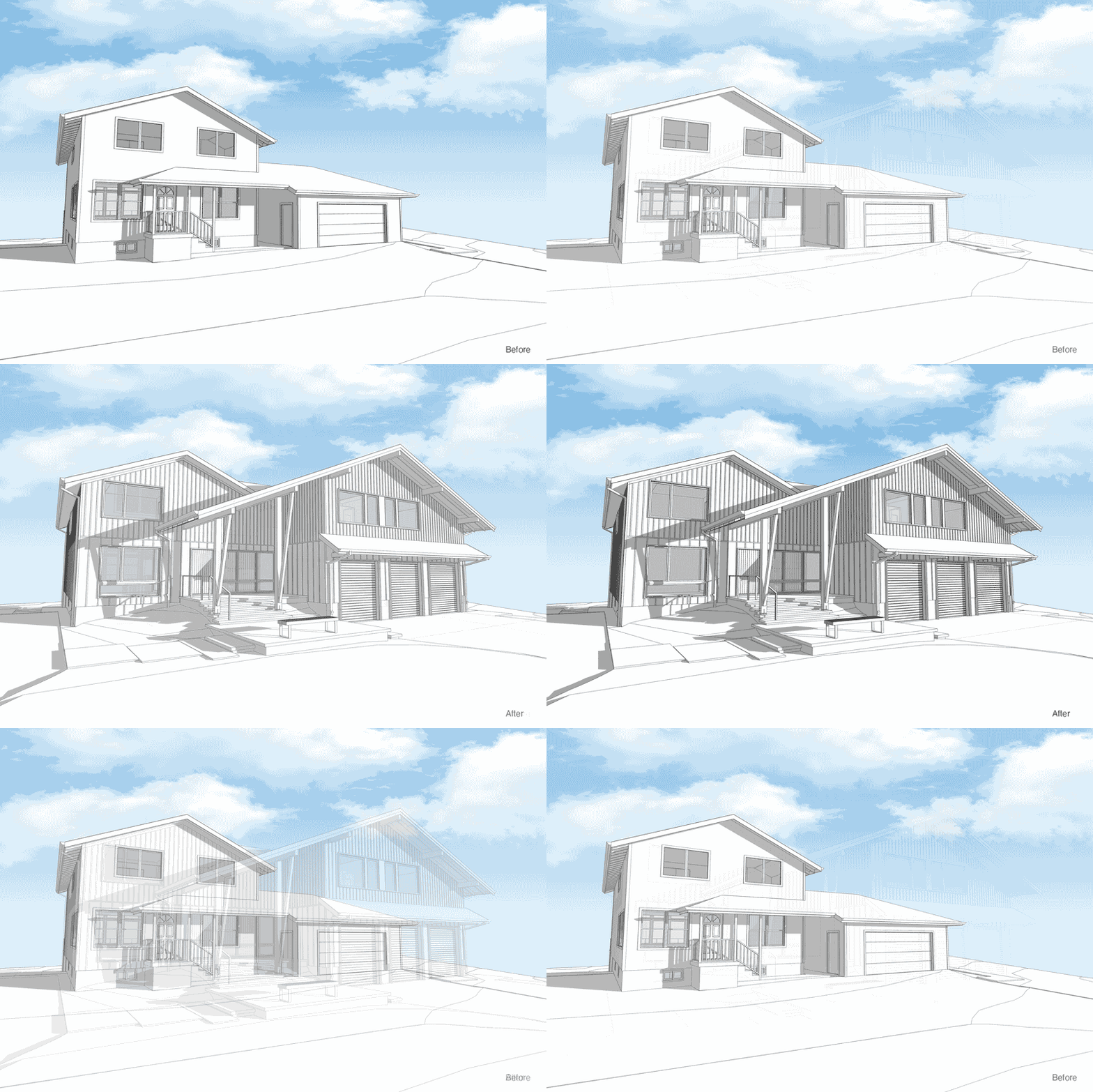
Rather than reading as a collection of separate elements, the house now gathers under one roof, giving it a stronger presence along the approach. Where the original structure allowed the garage to dominate, the new composition gives the house visual priority, with the garage integrated into the larger volume.
The roof also establishes a clear and legible entry. Its deep overhang creates a generous covered space, making it immediately apparent where to arrive and enter—something the original house lacked.
Tall timber columns support the extended roof, reinforcing its scale while giving it a sense of structure and permanence. Their simplified expression avoids literal references to traditional forms, while still grounding the house in a regional language of wood construction.
A stronger connection to the river
As part of the remodel, the design orients the rear of the house toward the river, positioning key spaces to take advantage of views and the surrounding landscape. The primary suite, located on the upper level, extends outward to a new deck that provides a more private connection to the site.
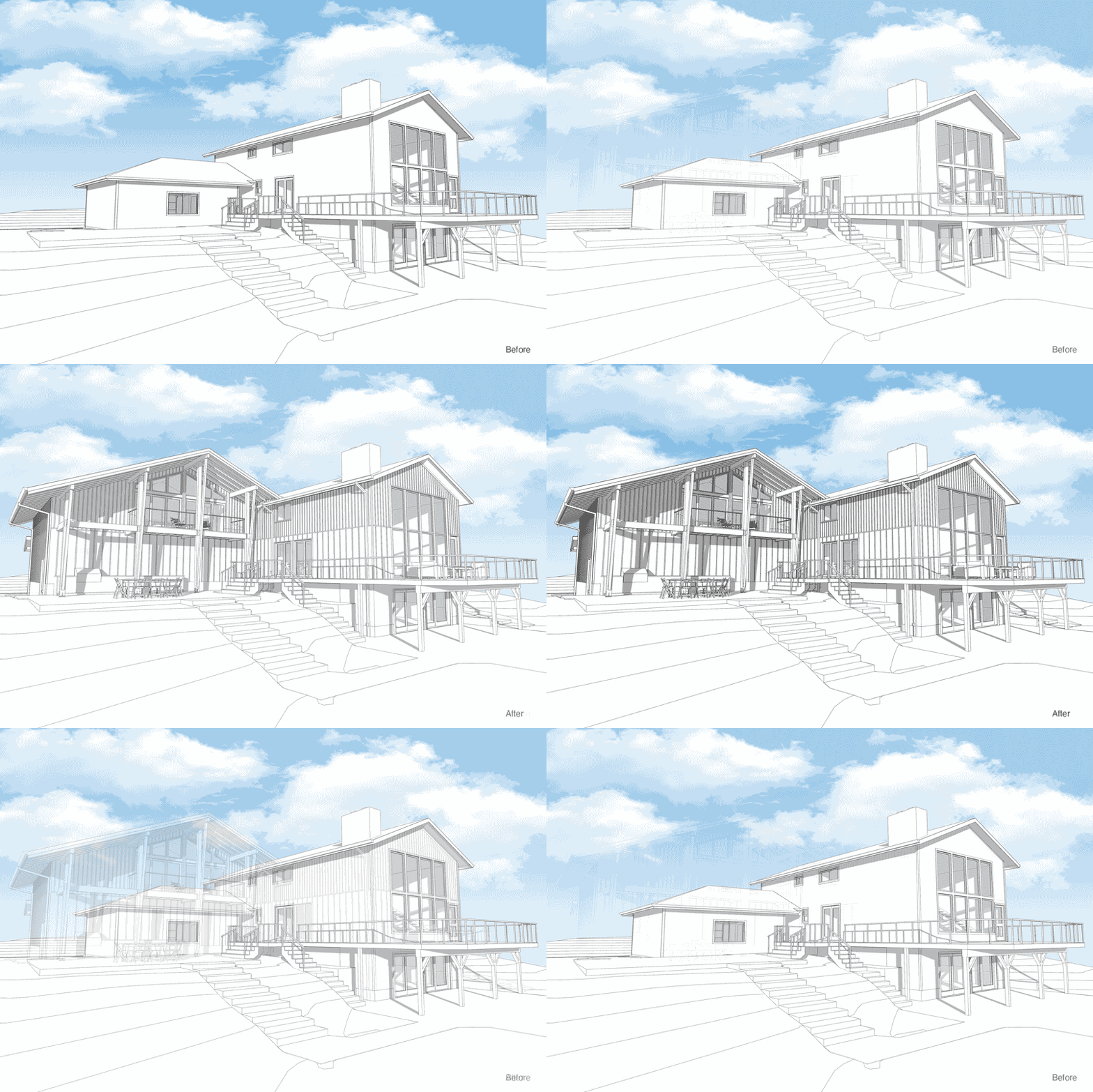
The large roof and deep overhangs give structure to the rear elevation, reinforcing the relationship between interior spaces and the outdoors while providing covered areas at the upper level.
The material palette is simple and consistent. Board and batten siding introduces texture and scale, with a shift in rhythm between the first and second floors that helps break down the height of the building. A tongue-and-groove soffit and exposed timber elements bring warmth and a sense of structure to the underside of the roof.
Pulling it all together
This remodel transformed a dated 1970s house along the river into one that works with both its setting and everyday life. Through a series of focused moves—clarifying circulation, reorganizing the plan, and giving the house a stronger architectural presence—the result is a home that feels both intentional and easy to live in.
If you’re considering a remodel of your own, we’d love to talk about how your home can better support the way you live. Reach out to start the conversation.
Project team
This project is currently under construction, with completion anticipated in Summer 2026.
Architecture: Christie Architecture
Interior Design: Courtney Nye Design
General Contractor: Hamish Murray Construction