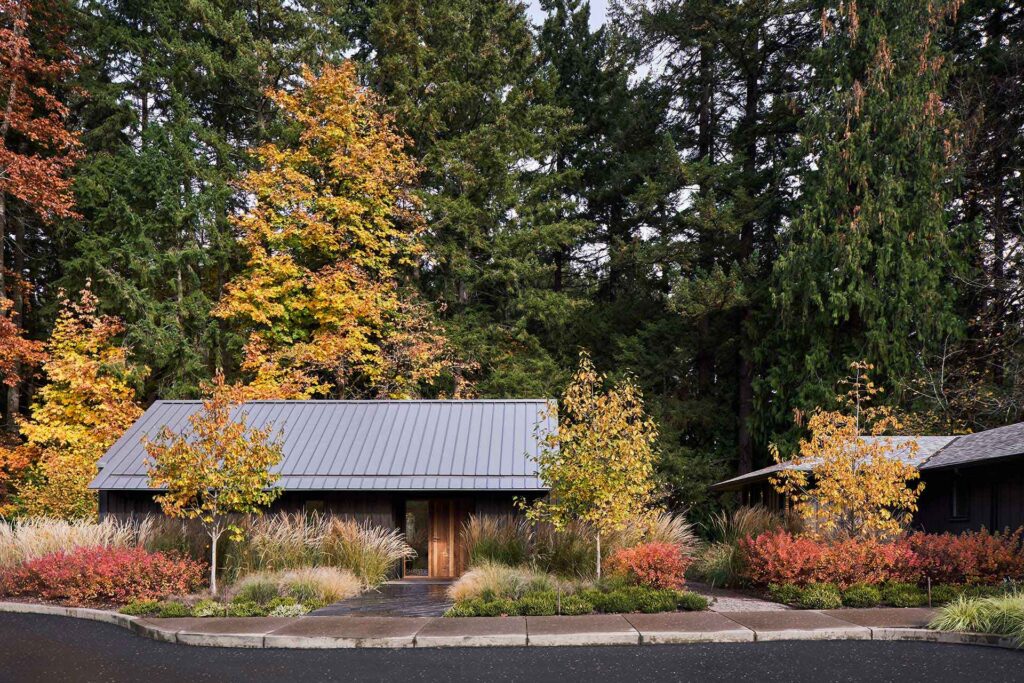

Working from home has been part of our practice from the very beginning. Today, our commute is about 50 feet to a dedicated detached studio—just far enough to require shoes—but it didn’t begin that way.
A practice that started small
When we started our business, we worked out of a single bedroom in our small bungalow in northeast Portland. We shared one desk, and we held client meetings at the dining table.
It was tight, but it worked. At that stage, we focused on getting the practice off the ground, not creating the perfect workspace. It was simple, affordable, and made sense for where we were at the time.
More space, same idea
As the practice grew, we needed more room. We moved to SW Portland, to a daylite ranch on a larger property in Marshall Park. We chose the property intentionally—we wanted a place where we could eventually build a dedicated studio.
But, before that happened, we set up shop in the basement.
The basement office
The basement gave us more space, but not a better setup. At one point, three of us worked at a single table. Cell service didn’t reach down there, so we stepped outside to the small patio to take phone calls. We started calling it the Telephone Terrace, and still call it that to this day.
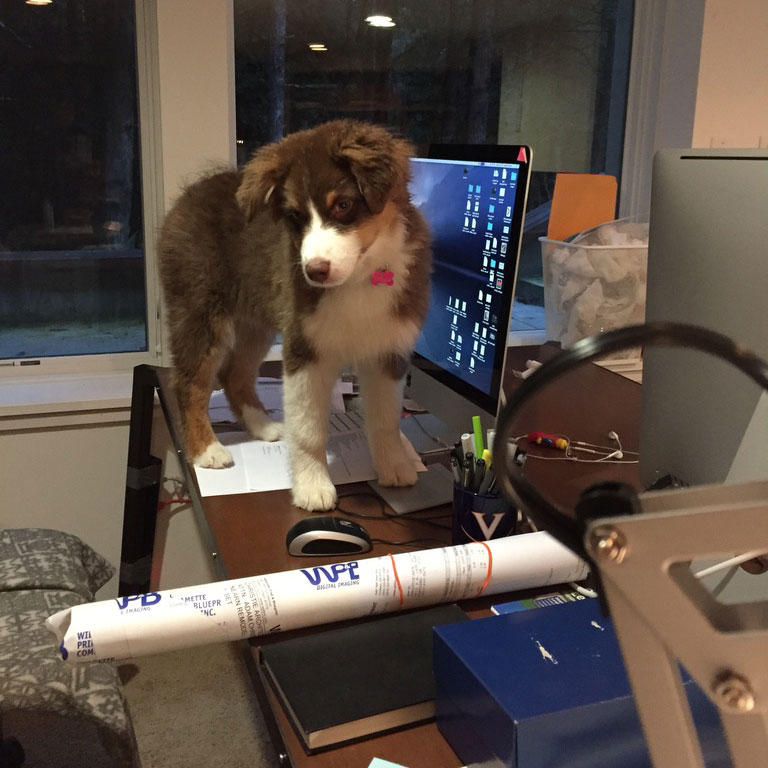
Though we were more productive, the basement office wasn’t glamorous—we still had client meetings at the dining room table, natural light was limited, and the ceiling height was challenging for 6′-5″ Adam. But it was part of the process. We figured things out as we went along; made do with what we had; and kept building the practice. We started to sketch Studio ideas and test fit them into the property, sometimes staking out a shape in the yard with flagging tape.
Building the studio
We spent four years in that basement, but we eventually built a dedicated studio on the property. It sits just steps from the house—close enough to feel connected, but separate enough to function as its own place.

That shift made a real difference to our daily lives.
We no longer worked in the house. We had a place to go in the morning and a place to leave at the end of the day. Even with only a short walk between the two, the separation matters. The work stays in the studio, and the house remains its own place.
What works about working from home
The advantages are straightforward. The “commute” is short and predictable. Instead of biking or driving for work, we can just exercise instead. We stay present for the beginning and end of the day in a way that would be difficult otherwise.
When our son was younger, that proximity mattered. We could be there in the morning, get him off to school, and be back home when he returned in the afternoon.
Working this way also makes daily logistics easier to manage. If something needs attention—a delivery, switching a load of laundry, or making lunch—we can step back to the house and then return to work without losing momentum.
Clients don’t see this setup as informal. If anything, they’re curious about it. Many ask to see the house, and the connection between where we live and where we work becomes part of the conversation.
And, of course, our two dogs spend most days in the studio with us. They’re part of the routine, whether we plan for it or not.
When everything went remote
When COVID hit and much of the world shifted to working from home, very little changed for us. We were already there.
The main difference came when our son’s school moved online. We set up a desk for him in the studio, and for a period of time, we worked side by side—each of us moving through our own version of the day in the same space.

It was a small adjustment in a larger moment of change, but it reinforced how well this setup already worked for us.
A place for the work
For us, it came down to creating a separate environment for the work.
The early versions—the bedroom and the basement—served their purpose, but they blurred the line between work and everything else. They felt convenient but also impermanent at the same time.
The studio changed that. It gave the practice a place of its own—still close to daily life, but clearly distinct.