
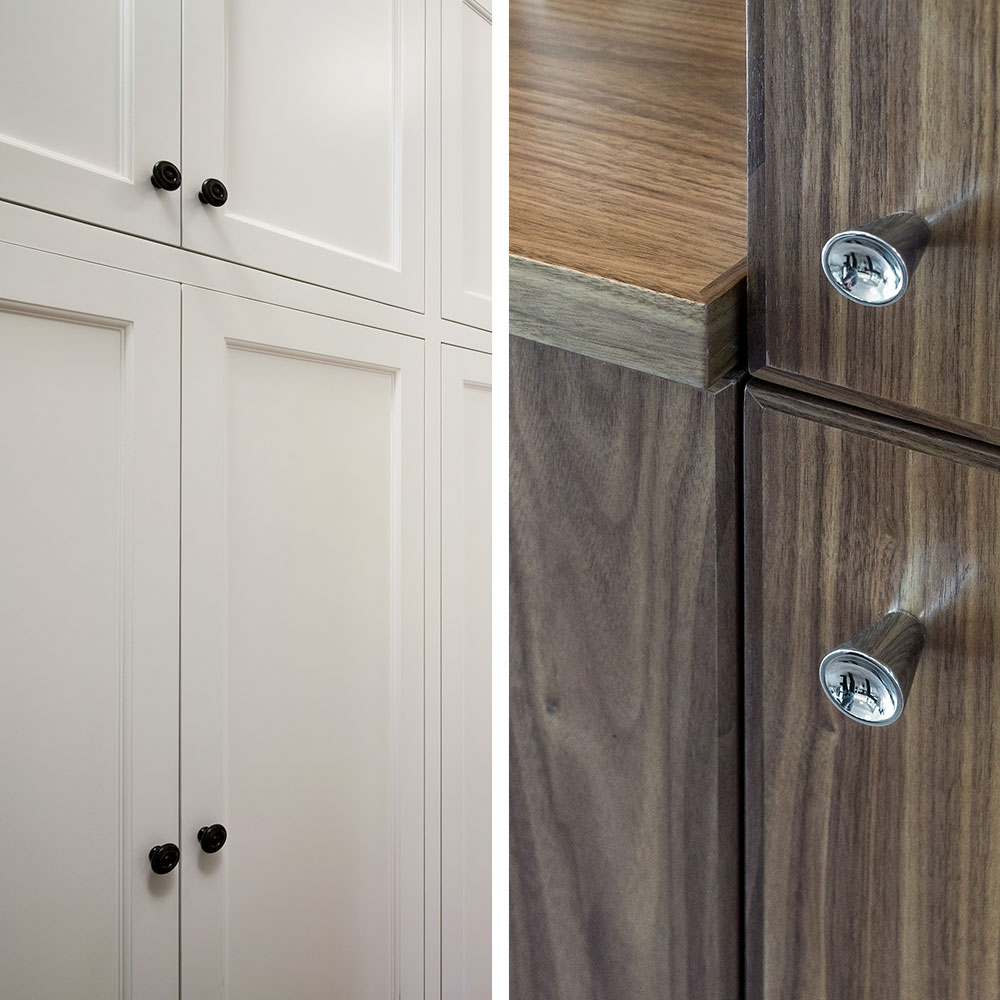
Cabinet terminology can get confusing quickly—especially when people start talking about inset vs overlay cabinets. These are the two most common approaches, and while the difference might seem subtle at first, it significantly impacts how cabinetry is built, how it looks, and where it works best. Understanding that distinction early on can make the rest of the design process feel much more clear and intentional.
What are flush inset cabinets?
Flush inset cabinets use a face frame, with doors and drawer fronts set flush within the frame rather than on top of it. Each opening is clearly defined by a visible frame, with the fronts aligned precisely within those openings.
That construction creates a very clean, intentional look, but with more detail than you’d typically see in modern cabinetry. You get subtle shadow lines around each door and drawer, and the alignment has to be exact—there’s very little room for error. Because of that, inset cabinetry tends to feel more refined and more closely related to traditional, furniture-style construction.
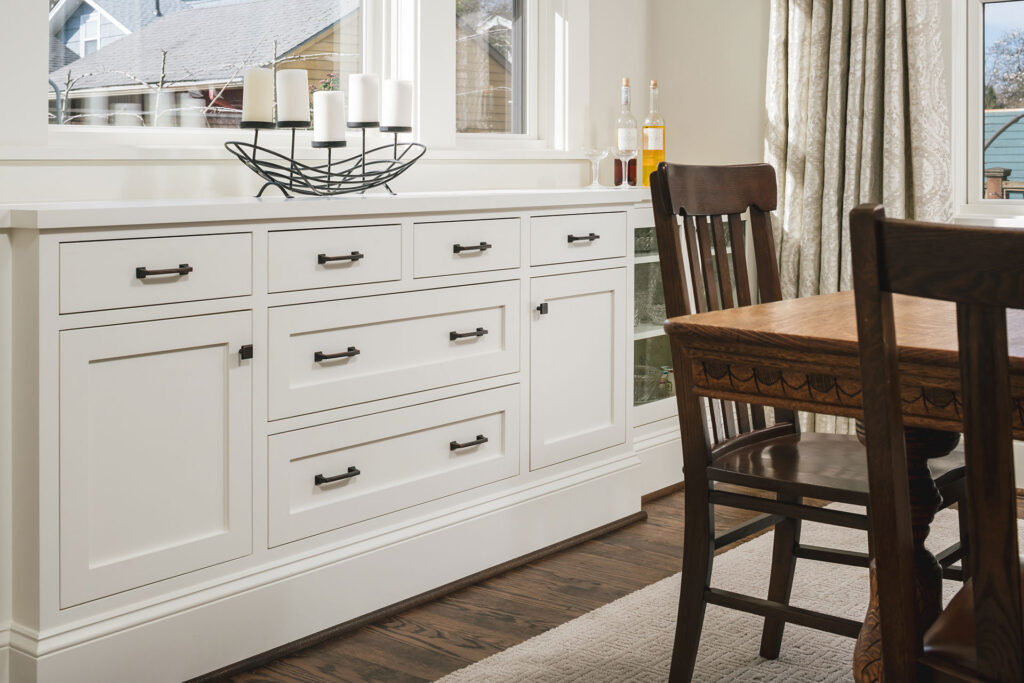
At Christie Architecture, we most often design flush inset cabinetry for traditional homes, typically with a painted finish. That said, this approach isn’t limited to that look. In the right material—like a natural wood—it can feel much more minimal and modern, with the precision of the construction becoming the focus rather than the detailing.
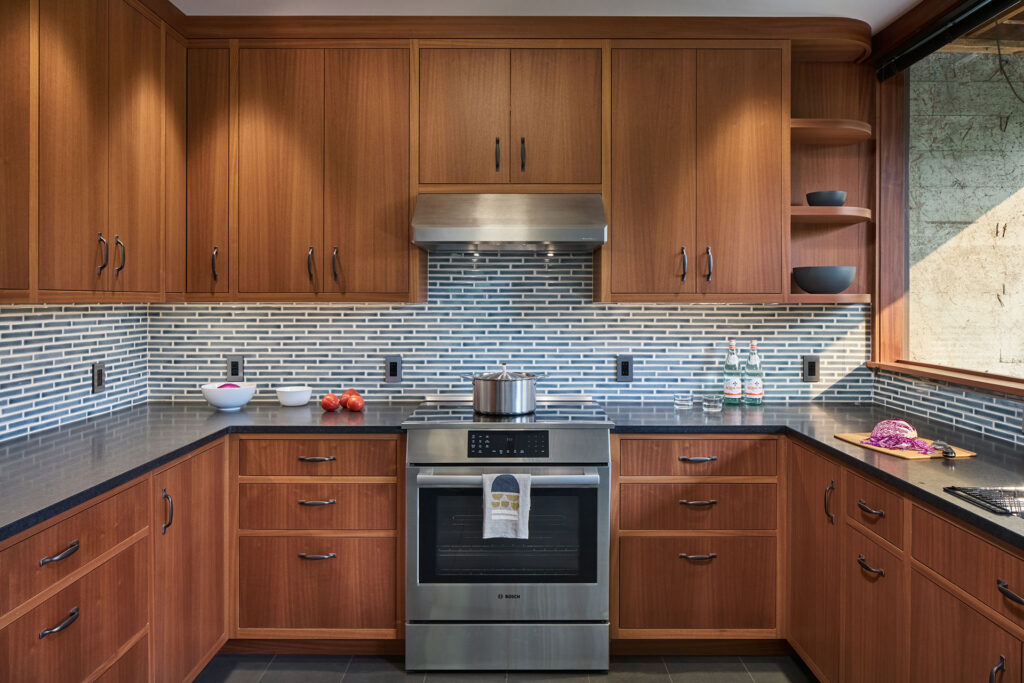
From a cost standpoint, flush inset cabinets are typically the most expensive option. The tighter tolerances, additional labor, and level of precision required to fabricate and install them all contribute to the higher cost.
What are overlay cabinets?
Overlay cabinets place the doors and drawer fronts on top of the cabinet structure rather than within it. Unlike flush inset cabinets, where each front fits into a defined opening, overlay cabinets create a more continuous surface across the face of the cabinetry.
The term “overlay” can be a little misleading because it refers to two different types of construction. Some cabinets use a face frame, with doors that overlay that frame. Others are frameless—often referred to as European-style—with no face frame at all and doors that attach directly to the cabinet box.
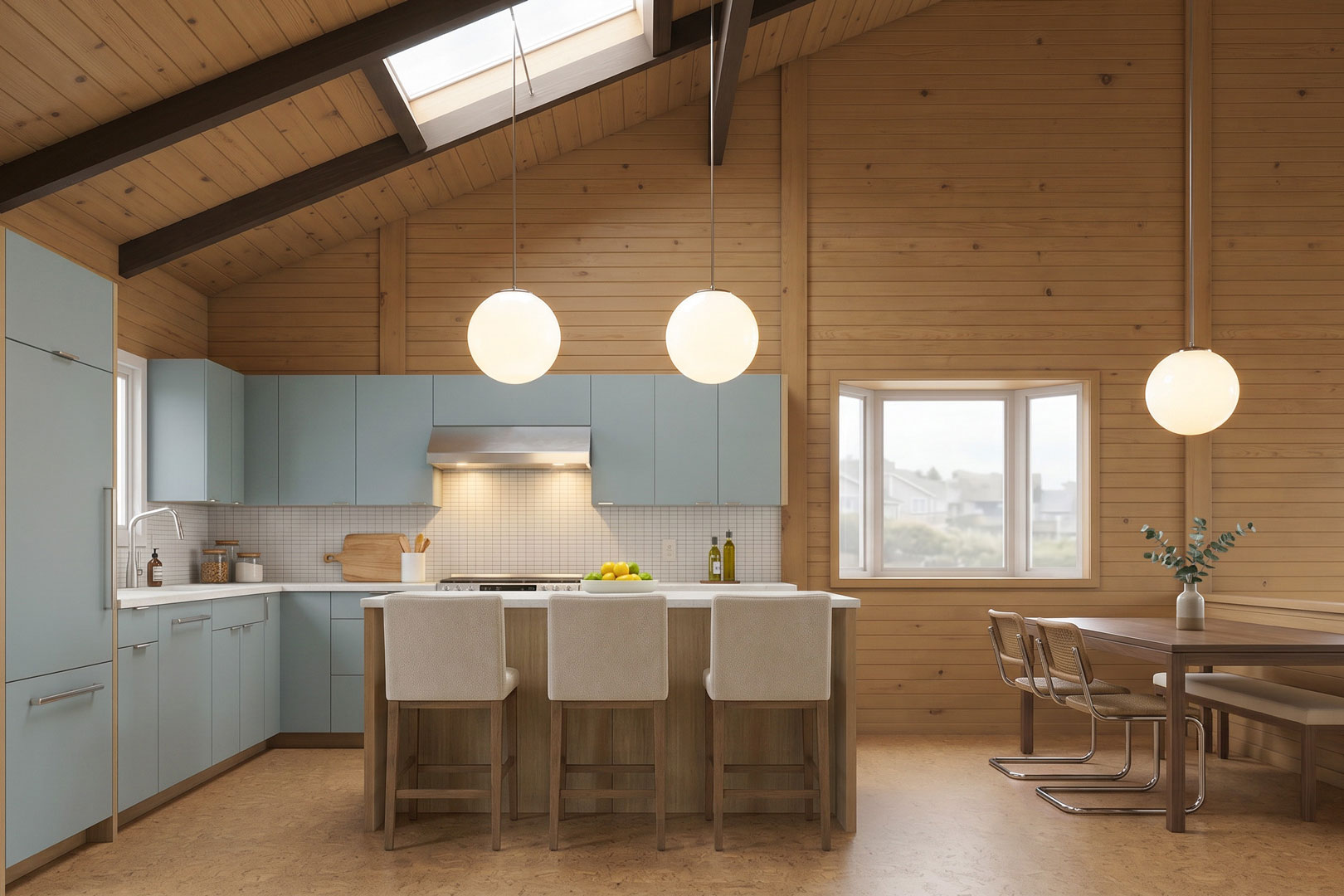
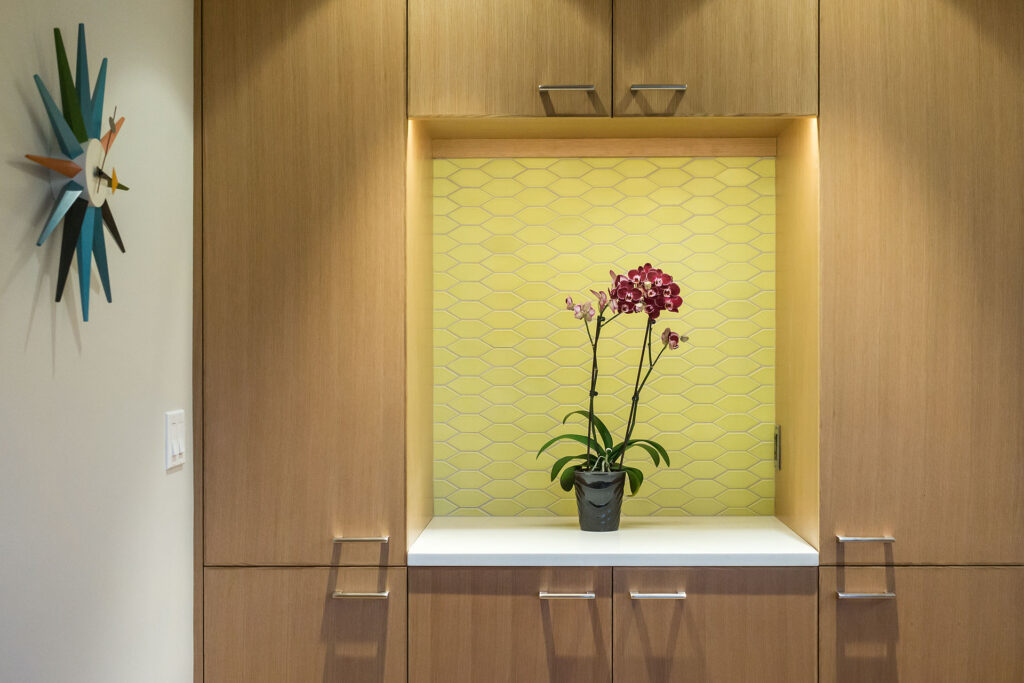
At Christie Architecture, when we design overlay cabinetry, we’re referring to this second type: frameless or European-style cabinets. This approach allows for tighter, more consistent spacing between doors and drawers and creates a cleaner, more streamlined overall appearance.


We most often design frameless overlay cabinetry for modern and more minimal homes, though it can also work well in transitional spaces depending on the detailing.
From a cost standpoint, frameless overlay cabinets are generally less expensive than flush inset, while still offering a high-quality, precise end result.
Why don’t we use overlay on framed cabinets?
Overlay cabinets built with a face frame are fairly common, particularly in stock cabinetry and at many big box retailers. They tend to have larger and more noticeable gaps between doors and drawers. Because the fronts sit on top of the frame, the spacing can feel less consistent, and the overall effect is more of a visible grid across the cabinetry.
Compared to flush inset or frameless overlay cabinets, this approach doesn’t achieve the same level of precision or refinement. The combination of the face frame and overlay fronts adds visual weight without the alignment and detail that make inset cabinetry feel intentional.
Because of that, it’s not something we specify in our work.
How should you think about choosing between inset vs overlay cabinets?
The choice between inset vs overlay cabinets usually comes down to a few key considerations. Rather than one being better than the other, it’s about what fits the house and the overall design.
Start with the architecture of the house.
Flush inset cabinetry tends to feel more aligned with traditional homes, where a bit more detail and articulation is appropriate. Frameless overlay cabinetry works naturally in more modern or minimal spaces, where a cleaner, more continuous surface is the goal.

Think about how you want the cabinetry to read.
Inset cabinets emphasize each door and drawer as its own element, with shadow lines and framing that make the construction more visible. Frameless overlay cabinets do the opposite—they minimize those interruptions and read more as a single, continuous plane.
Consider material and finish.
Painted cabinetry is often a natural fit for inset construction, while natural wood can go either direction depending on the overall design. Frameless overlay cabinetry also lends itself to engineered panel finishes—typically smooth, solid-color or wood-look surfaces—which create a clean, consistent appearance and can range from matte to high gloss.
Factor in cost.
Flush inset cabinets are typically more expensive than frameless overlay cabinetry.
Ultimately, both approaches can be beautiful when used intentionally. The right choice comes down to the character of the house and the kind of experience you want the cabinetry to create.
A final note on inset vs overlay cabients
Understanding the difference between inset vs overlay cabinets early on helps bring clarity to a lot of design decisions that come later. While both approaches can result in beautiful, well-crafted cabinetry, they create very different experiences in a space.
If you’re thinking about a remodel or new home and want to talk through inset vs overlay cabinets in the context of your project, feel free to reach out.