

A move to Portland to be closer to family set this project in motion, but the bigger goal was to create a home that could support the next chapter of life. For this client, that meant building a single-story home—one that removes stairs from daily routines and makes everything feel more accessible and connected. The focus wasn’t just on function, but on creating a house that feels easy to live in, both now and over time.
Defining the program
Located in Portland’s Beaumont-Wilshire neighborhood, the project sits on a typical 50-foot-wide lot, slightly deeper than most at 128 feet. The existing house was a tear-down, making way for a new home better suited to the client’s needs.
The program reflects how the client lives, with an open kitchen, dining, and living area, a primary suite, and additional bedrooms for visiting family. Supporting spaces include a mudroom and laundry, a powder room, and a dedicated yoga room. She also wanted a covered patio and pool to support outdoor living, all within a single-story home.
Organizing the plan
The plan is organized as two distinct halves, with public spaces on one side and private spaces on the other. A central corridor runs between them, anchored by the entry at one end, creating a clear and intuitive layout.

At the front of the house, the garage anchors the plan, with a mudroom and laundry directly behind it. Guest bedrooms also sit toward the front, providing space for visiting family while maintaining separation from the more private areas.
Toward the rear, the plan shifts to the spaces used most often. The living area and primary suite both face the backyard, offering privacy from the street and a direct connection to the covered porch.
Making it possible
Fitting this program on a single level exceeds Portland’s lot coverage limits, so instead of reducing the scope, the design moved forward with the understanding that an adjustment was required.
The approach centers on the overall scale of the building. As a single-story home, the house remains low and well below neighborhood height limits, reducing its perceived bulk and impact on adjacent properties. This places the increased lot coverage in context and supports approval through the adjustment process.
Shaping the exterior
The exterior takes cues from a classic ranch-style house, with a low, horizontal profile and a simple hip roof that keeps the form quiet and grounded. The restrained scale allows the house to sit comfortably within the neighborhood without calling attention to itself.
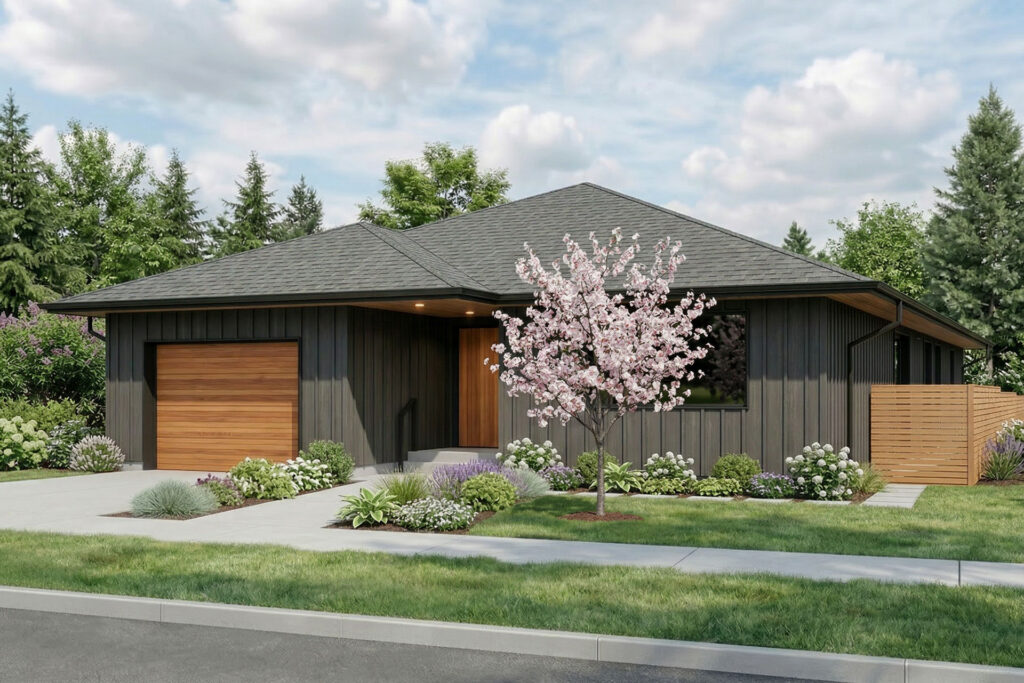
Dark-stained cedar board-and-batten siding gives the house a sense of weight, while natural cedar soffits introduce warmth at key moments—especially at the entry and along the covered porch. Black window frames provide contrast and definition, and natural wood at the garage door and front entry adds a softer, more tactile layer.
Extending living outdoors
At the rear of the house, the living space extends outward to a covered patio. The connection between inside and out is easy and direct, reinforcing the backyard as part of daily living.

The patio uses the same material palette as the rest of the house, with a warm cedar soffit overhead and dark siding framing the space. Skylights bring natural light into what would otherwise be a shaded area, making the patio comfortable to use throughout the day.

From the patio, the yard and pool sit just beyond, creating a layered outdoor environment that supports both quiet daily use and time with visiting family.
Bringing people together
The kitchen serves as the social center of the house—a place where people naturally come together. With family visiting often, it was important that the kitchen support both everyday routines and more informal gatherings.
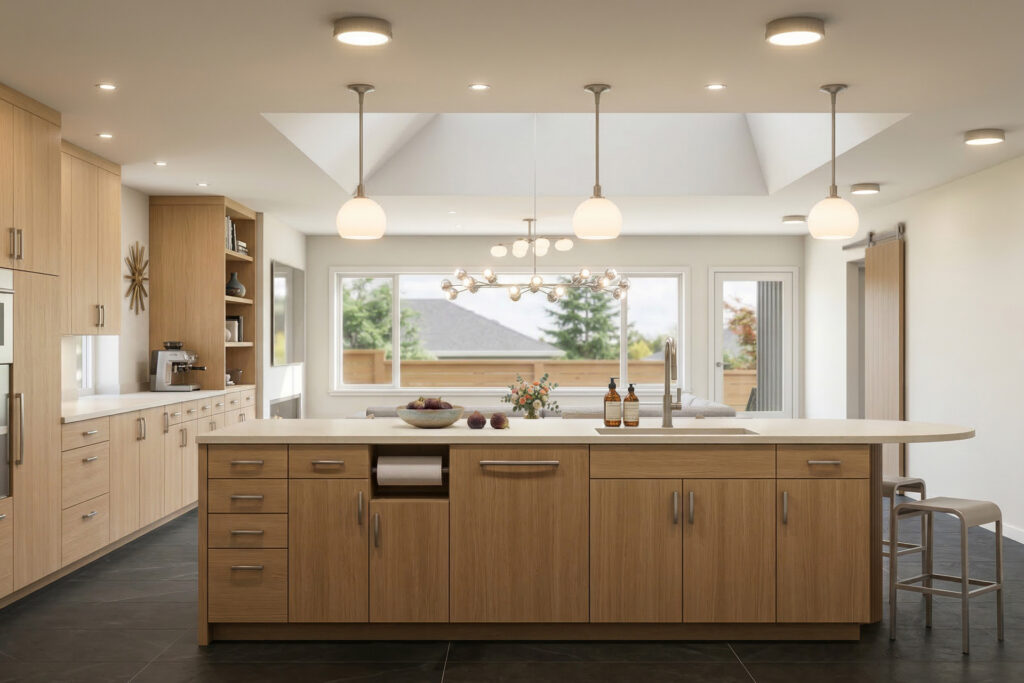
A long island anchors the space, providing generous seating and becoming the primary place to sit, talk, and spend time. The sink is located at the island, keeping the cook connected to the conversation rather than turned away from it.

Behind, the range wall remains calm and ordered, with rift white oak cabinetry framing a field of green tile from Fireclay. The centered composition creates a quiet backdrop that lets activity around the island take focus.
Connecting the living spaces
The kitchen opens directly into the dining and living areas, forming one continuous space that supports daily life. At the center, a large skylight defines the dining area, bringing natural light deep into the plan. It gives the space a sense of height and presence without making it feel formal, keeping it aligned with the overall ease of the house.

Beyond, the living area remains calm and understated. A simple fireplace wall and built-in shelving provide structure, allowing the space to feel comfortable and easy to settle into.

Large windows and a direct connection to the patio keep the focus on the backyard, reinforcing the relationship between the interior spaces and the outdoor areas just beyond.
Designing for long-term living
The primary bathroom supports ease of use, with a simple layout for both daily routines and more relaxed moments. A walk-in shower provides direct, unobstructed access, while a separate tub offers a place to slow down and unwind.
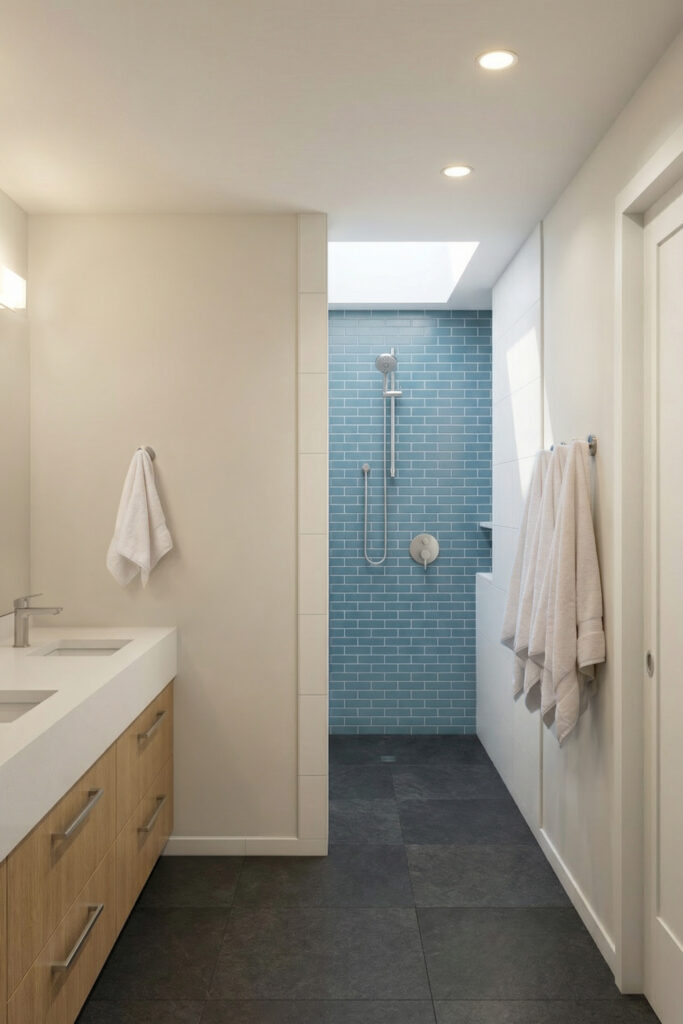
A large skylight above the shower brings natural light into the space, making what could be a more enclosed area feel open and connected to the sky. Blue ceramic tile wraps the shower and tub, tying the space together, while porcelain floor tile grounds the room with a darker, more durable surface.

Bringing it all together
This single-story home brings together a thoughtful plan and a clear sense of purpose. The result supports both daily life and long-term comfort, with construction scheduled to begin in summer 2026.
If you’re thinking about your own project, we’d love to hear from you.