

When a new tenant moves their business into an existing space, the proposed activity may not match the previous use. This change can have more impact than expected. The building and zoning codes refer to this as a Change of Use. Understanding this concept early can help avoid surprises during a tenant improvement project.
What is a Change of Use?
For the purpose of discussing building permit requirements, a Change of Use occurs when one type of business or activity (use) in a space changes to another while the occupancy classification remains the same under the building code.
This occurs when different businesses fall within the same occupancy group. A café, a bank, an advertising agency, and a medical clinic all fall within Group B Business occupancy. If a space previously used as a café becomes a bank, office, or clinic, the use has changed even though the occupancy group remains the same.
This is different from a change of occupancy, which moves a space from one occupancy group to another.
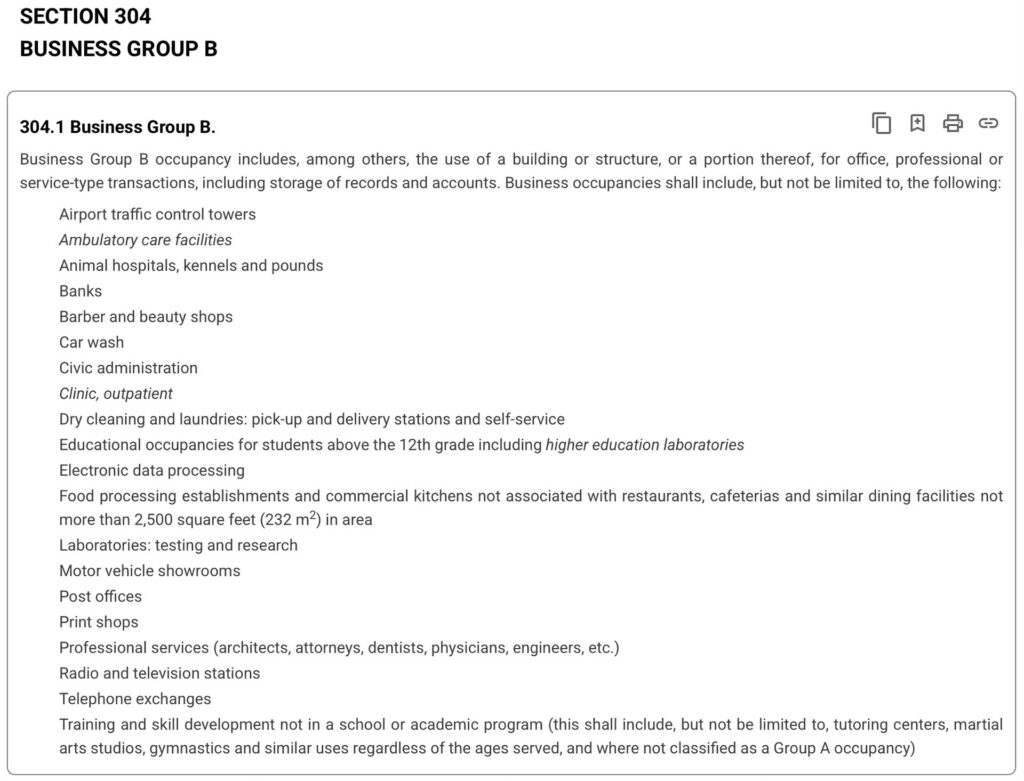
Alongside building code requirements, changes in the number of visitors to the site from a new use may also trigger zoning requirements. While zoning codes define ‘use’ differently from building codes, they still recognize that different types of businesses have different impacts on the surrounding neighborhood and regulate them accordingly.
Why a Change of Use requires a permit
New business activities can introduce different safety considerations or site access intensities, even when they share the same occupancy group. Changes in the number of occupants or visitors, the type or quantity of materials stored, or the equipment used may affect how the space works safely.
Under the zoning code, certain districts place limits on specific uses. For example, an Industrial zone may limit Office use. In a 10,000 square foot warehouse with multiple tenants, a cap—such as 2,500 square feet—may restrict how much of the building can be used for office space. It becomes important to understand whether existing tenants have already used that allowance.
By requiring permits, the jurisdiction can oversee the balance of uses in the zone, and an owner can research old permits to determine whether their business is allowed.
For more detail, the City of Portland provides additional guidance on change of use requirements.
What if the space needs no changes?
This happens more than you might imagine—but even then, you still need a Change of Use permit. The new tenant must demonstrate that the existing building layout supports the code requirements of the new use. As part of that review, the jurisdiction looks at elements like the number of toilets, exit access, accessible routes, and whether the building requires an elevator.
Examples of changes that may trigger code review
Example 1: Converting a car dealer showroom into an office for professional services.
While both fall under Group B, this scenario still requires review. Converting vehicle display space into open or partitioned offices changes how people use the space—introducing more occupants and different circulation patterns—which can impact life safety requirements.
Example 2: Converting an office into a medical clinic.
An accountant’s office and a medical clinic both fall within Group B occupancy. However, a clinic may introduce additional plumbing fixtures, sanitation requirements, or increased occupancy which can affect how the space functions.
What this means for a tenant improvement project
A Change of Use can affect the scope of a tenant improvement project, even when the occupancy classification remains the same.
As part of that process, the building department reviews how the new business operates in the space to determine what updates will meet current safety standards. These could include adjustments related to occupant load, fire protection, accessibility, or other life safety considerations.
Understanding whether a proposed project involves a Change of Use early in the process can help identify potential requirements before design and permitting begin. If you’re planning a tenant improvement project, we can help evaluate the proposed use and guide the project through design and permitting. Contact us to start the conversation.