
Before signing a lease or purchasing a property, it’s important to understand how local regulations may affect a commercial tenant improvement. Understanding these rules early can help avoid costly surprises during design and permitting.
Before signing a lease
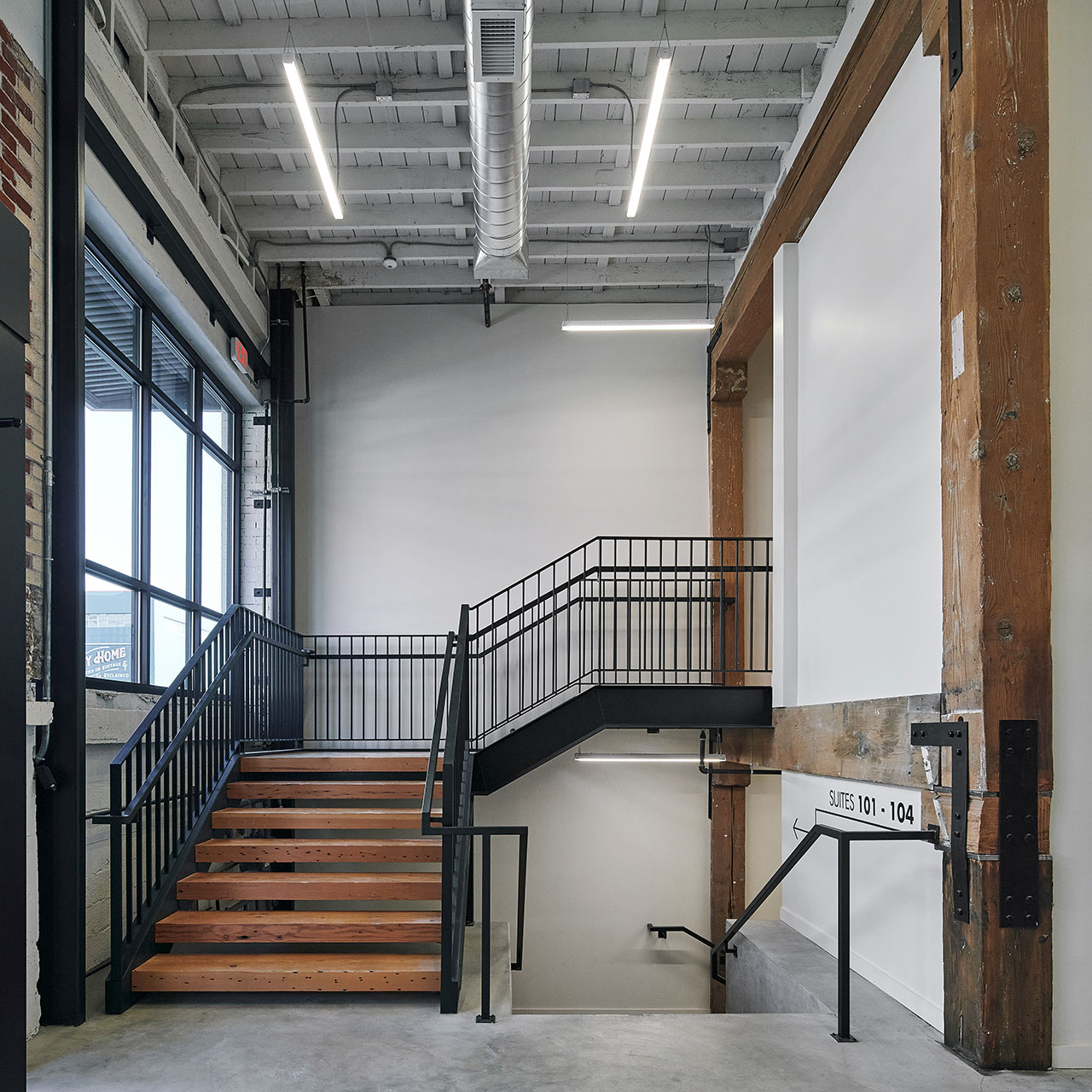
You found a great space for your business — an old industrial building with exposed brick, tall ceilings, and heavy timber structure. The real estate listing says it used to be a boatbuilder’s shop, and the space seems perfect for your new office.
But many tenants overlook one important detail: whether the building is already approved for their business use.
If the previous tenant operated a similar business, the transition may be straightforward. If not, the space may require upgrades or regulatory review before you can occupy it. These modifications can take time to make the space ready for your business.
This is where a call to the local building department — or your architect — can make a big difference.
Why zoning and building codes both matter
Two different regulatory systems affect a commercial tenant improvement: the zoning code and the building code.
Zoning regulates how property can be used within a neighborhood. It determines whether a specific use is allowed outright, prohibited, or subject to review. Depending on the jurisdiction, zoning may also address landscaping, screening, parking, and improvements to the public right-of-way.
The building code regulates the health and life safety requirements for the structure itself. It addresses things like structural strength, fire safety, exit requirements, door sizes, accessibility, and the number of required plumbing fixtures.
Who to talk to before you sign a lease
If you are considering a new space for your business, it’s worth speaking with both a planner and a plans examiner at the local building department.
A planner can identify potential zoning issues and confirm whether your proposed business use is allowed at that location. A plans examiner can help identify possible building code implications, including life safety or accessibility requirements.
If the terminology and regulations feel overwhelming, call your architect who can translate the code jargon into meaningful impacts for your business. Understanding these issues early can help you evaluate whether a space is truly the right fit.
Key regulatory thresholds to understand
Common issues that arise during tenant improvements include:
- Change of use
- Change of occupancy
- Toilet counts
- Accessibility upgrades
- Structural or seismic upgrades
A change of use occurs when the activity in a space changes but the building’s occupancy classification remains the same. A change of occupancy occurs when the new use moves the space into a different occupancy classification under the building code. Even if your business proposes minimal physical modifications to the space, a jurisdictional review is required for these two kinds of changes.
Accessibility requirements may also apply when a project alters an existing building. In Oregon, the 25% accessibility rule requires projects to use up to 25% of the construction budget to improve accessibility as part of a permitted renovation.
Changes in building use can also trigger evaluation of the building for structural upgrades. In particular, vintage brick buildings are particularly susceptible to needing substantial seismic improvements. But any older structure may face requirements to meet modern seismic safety standards.
Each of these factors can affect the scope, cost, and timeline of a commercial tenant improvement project.
Before committing to a space
That old boatbuilder’s shop might look like the perfect place to launch your business. But before signing a lease or purchasing a property, it’s worth confirming that the building can legally support the way you plan to use it.
A quick conversation with the local building department — or your architect — can identify potential code triggers early and clarify what may be required before the space can be occupied. Understanding those issues upfront can make a commercial tenant improvement project far smoother from design through permitting.